
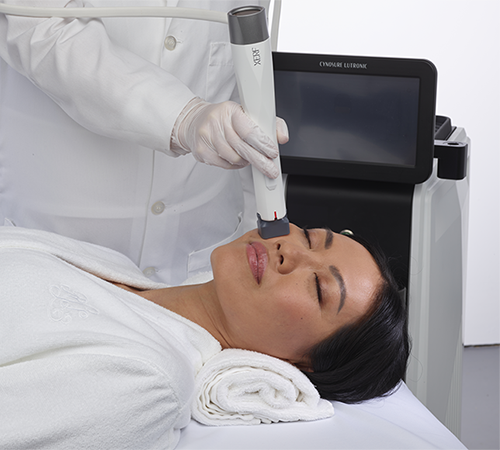
Skin changes slowly. One year you notice a softer jawline. A little looseness under the chin. Maybe the skin around your stomach does not bounce back the way it used to.
For many adults across Ontario, the goal is not surgery. It is improvement. Firmer skin. Subtle lift. Minimal downtime.
Non-surgical skin tightening treatments are designed to stimulate collagen production using controlled energy, without incisions or general anesthesia. When used appropriately, they can improve mild to moderate skin laxity in a gradual and natural-looking way.
Let’s break it down properly.
What Is Non-Surgical Skin Tightening?
Non-surgical skin tightening involves medical aesthetic procedures that use controlled energy to encourage collagen and elastin production within the deeper layers of the skin.
Collagen is the structural protein that gives skin firmness.
Elastin allows skin to stretch and return to shape.
After age 30, collagen production declines steadily. Published dermatologic research confirms that collagen levels decrease approximately 1 percent per year in adulthood.
When collagen weakens, skin loses structure. That is where tightening treatments come in.
These procedures do not remove excess skin. They work by encouraging your body to rebuild internal support over time.
They are most effective for:
Early jawline softening
Mild neck laxity
Crepey texture
Postpartum or mild post-weight-loss looseness
They are not a replacement for surgical lifting in cases of significant sagging.
How Skin Tightening Treatments Work
Most non-invasive tightening treatments rely on controlled heat energy delivered into the dermis.
When dermal tissue is heated to a therapeutic range, two things happen:
Existing collagen fibres contract slightly.
The body initiates a wound-healing response that produces new collagen over several weeks.
This process is known as collagen remodeling.
Different technologies reach different depths:
Radiofrequency penetrates deeper dermal layers.
Laser energy primarily targets the upper dermis and epidermis.
Microneedling with radiofrequency combines mechanical stimulation with thermal energy.
Results are gradual because collagen formation takes time. Most patients notice improvement between 8 and 12 weeks after treatment, with continued changes over several months.
Best Skin Tightening Treatments Available
There is no single “best” treatment. The right option depends on the severity of laxity, skin thickness, treatment goals, and downtime tolerance.
RF Microneedling (Potenza)
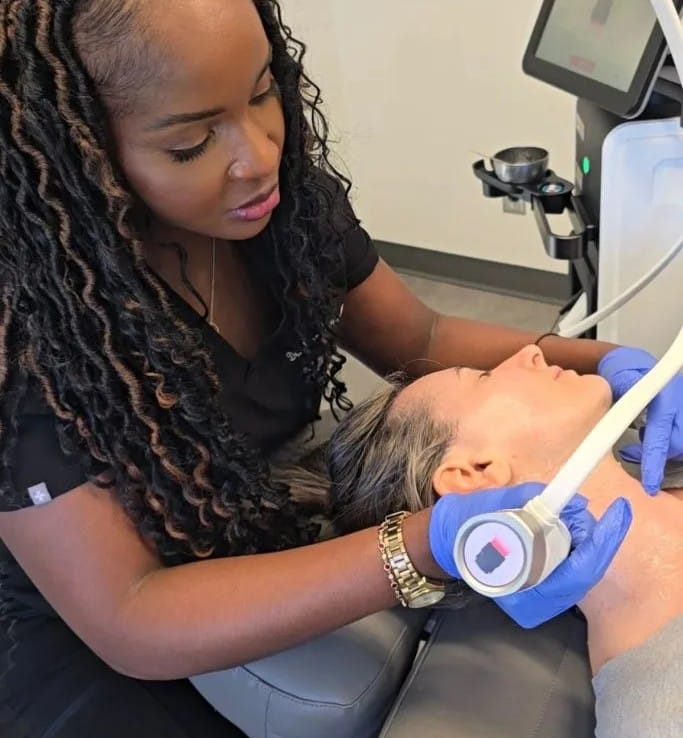
Microneedling RF combines fine needles with radiofrequency energy delivered beneath the skin’s surface.
The microneedles create controlled micro-injuries while radiofrequency heats deeper dermal layers. Clinical studies on RF microneedling demonstrate improvements in skin laxity, texture, and scar remodeling.
It is often recommended for:
Moderate facial laxity
Acne scarring
Jawline definition concerns
Textural irregularities
Downtime is typically mild to moderate, including temporary redness and swelling.
Most treatment plans involve a series of sessions spaced several weeks apart to support progressive collagen development.
For patients in Ontario seeking deeper dermal remodeling, RF microneedling is often a strong option.
XERF Skin Tightening
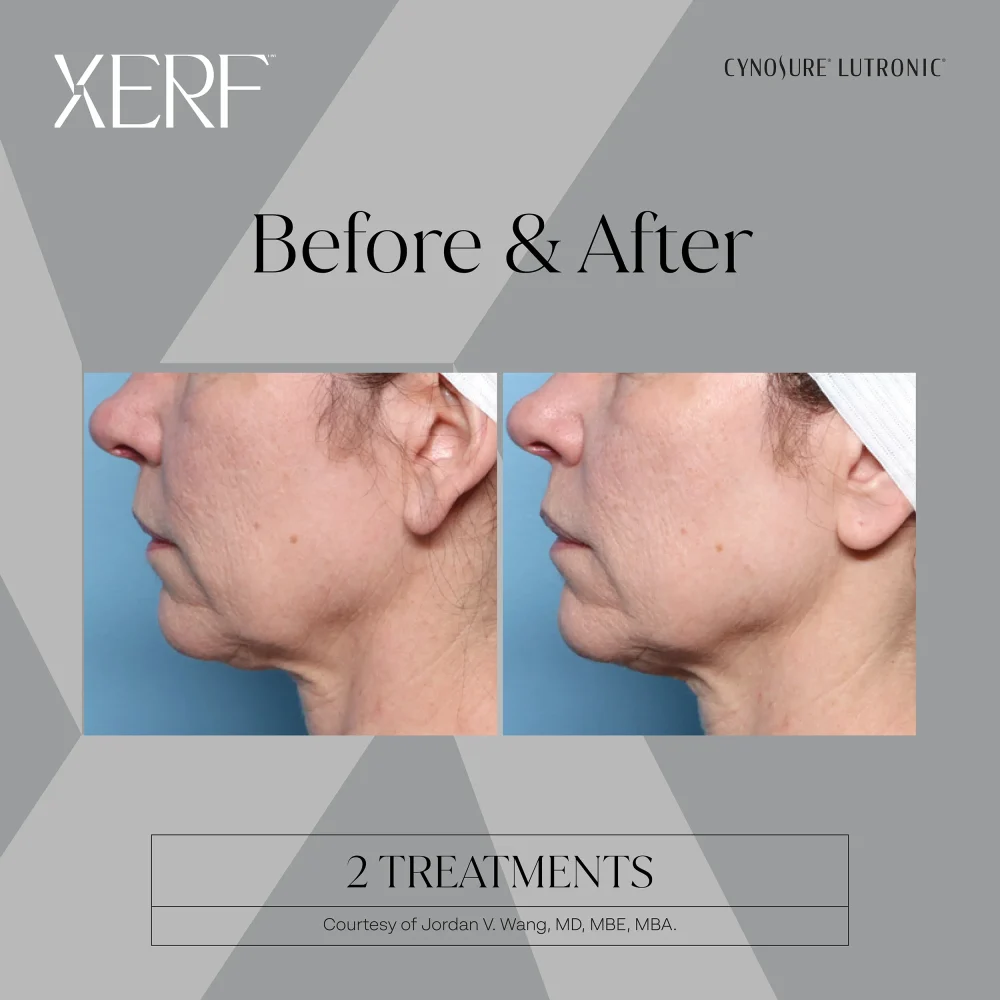
XERF is a non-invasive radiofrequency-based treatment designed to deliver controlled dermal heating without needles.
Because it does not involve skin penetration, it generally involves minimal downtime. Patients may experience temporary warmth and mild redness.
This option is often appropriate for:
Early skin laxity
Preventative collagen stimulation
Patients who prefer non-invasive treatments
Results build gradually as collagen production increases over time.
It is important to understand that non-invasive RF typically requires multiple sessions to achieve optimal tightening.
Laser-Based Tightening Options
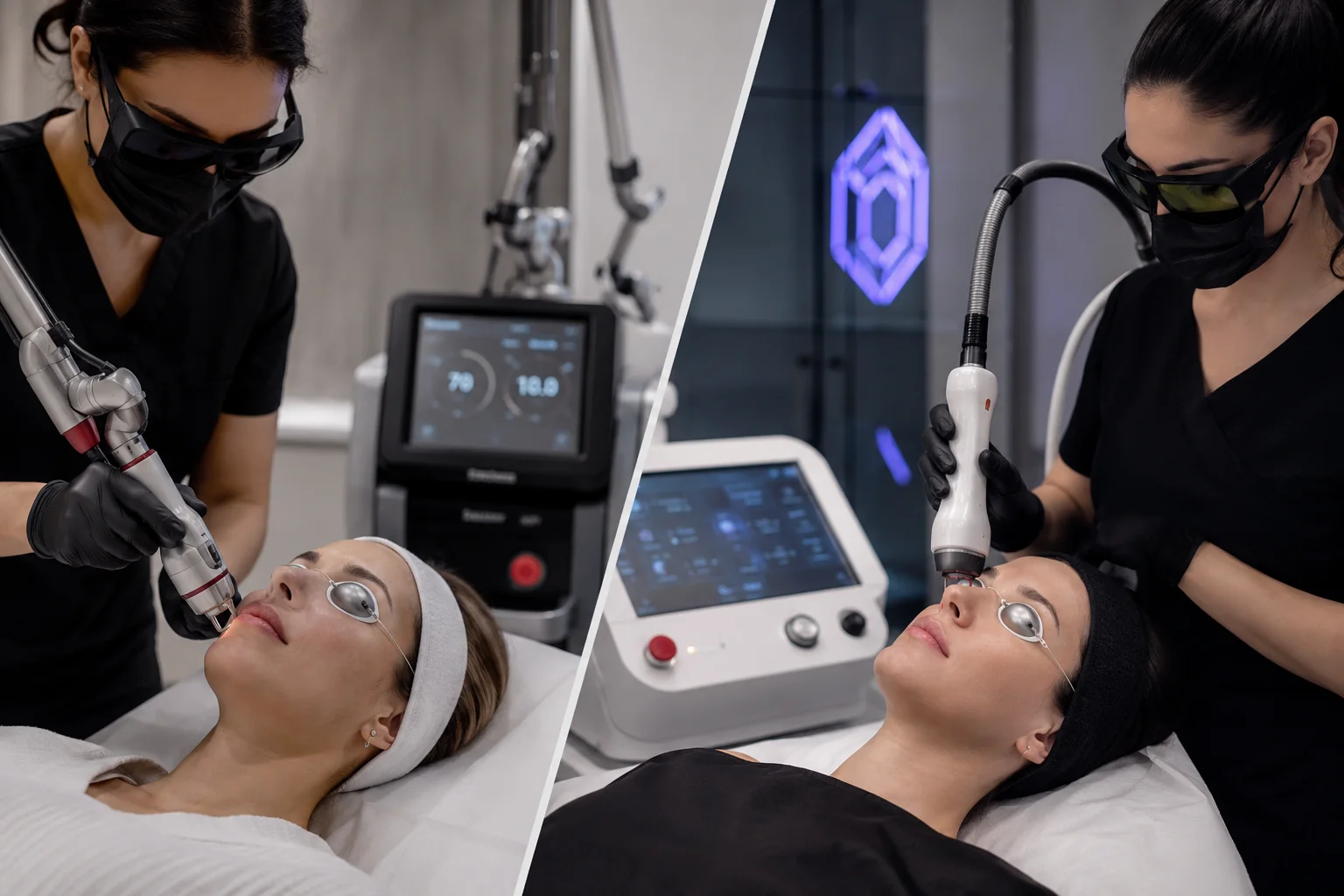
Laser skin tightening uses targeted light energy to heat the upper dermis and stimulate collagen formation.
In addition to improving mild laxity, laser treatments may also:
Improve fine lines
Address uneven pigmentation
Enhance overall skin tone
Because laser energy interacts with pigment and water in the skin, treatment plans must be individualized based on skin type.
Laser-based tightening is commonly selected for patients who want both textural improvement and mild firming in the same treatment series.
Skin Tightening for Different Body Areas
Affronter
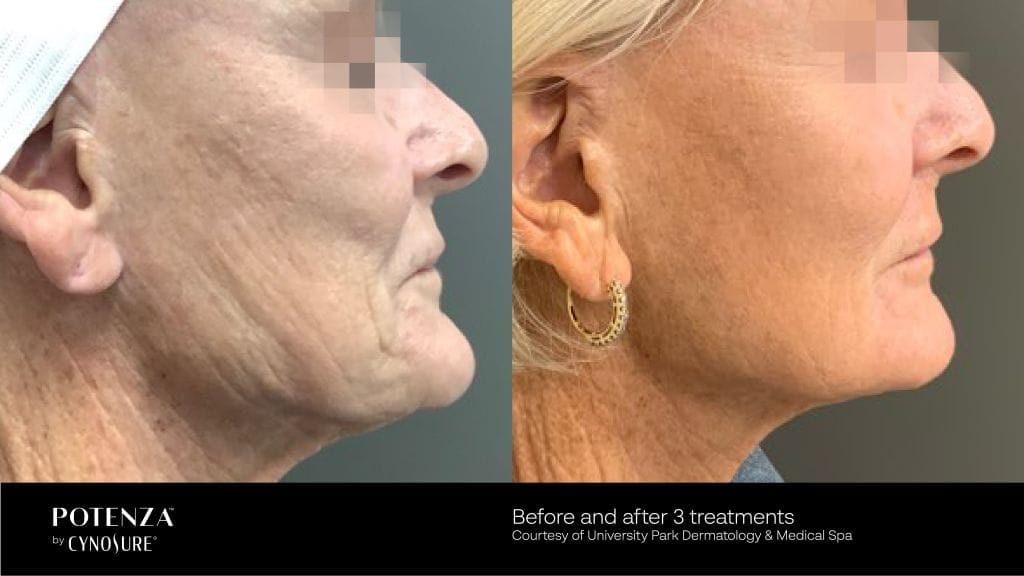
The face is the most common treatment area.
Concerns often include:
Early jowls
Softening jawline
Cheek laxity
Fine perioral lines
Energy-based treatments can support collagen rebuilding in these areas when laxity is mild to moderate.
Severe sagging may require surgical consultation.
Neck
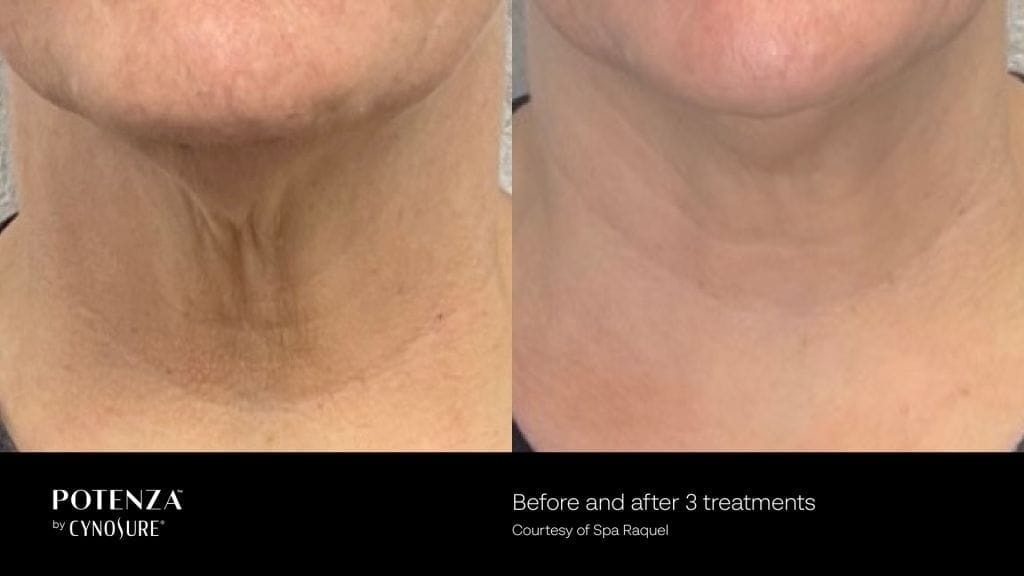
Neck skin is thinner and more prone to crepey texture.
Radiofrequency-based treatments are frequently used here because controlled dermal heating can stimulate collagen in delicate tissue.
Multiple sessions are often necessary for visible improvement.
Stomach
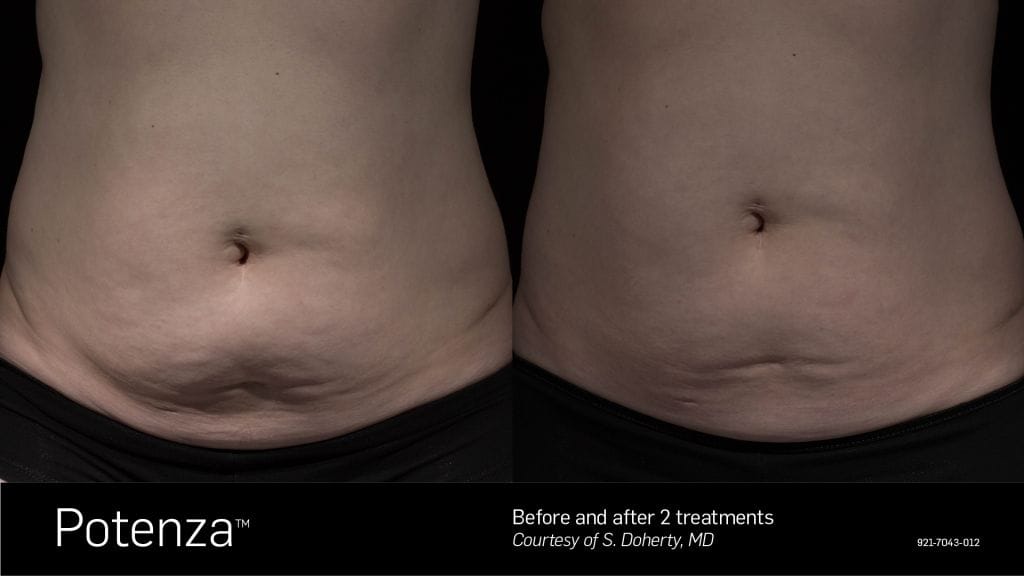
Postpartum skin laxity and mild weight-loss looseness are common concerns.
Non-surgical tightening may improve skin firmness when excess skin is limited. However, large amounts of redundant skin typically require surgical correction.
A proper consultation is essential to determine realistic outcomes.
Lire: How to Tighten Skin After Pregnancy Without Surgery
How to Choose the Right Treatment
Choosing the right treatment depends on several factors:
Degree of laxity
Skin thickness
Presence of scars or pigmentation
Comfort with downtime
Treatment budget
In general:
Mild laxity may respond well to non-invasive RF.
Moderate laxity and textural issues may benefit from RF microneedling.
Surface irregularities with mild laxity may respond well to laser-based treatments.
A professional skin assessment helps determine depth of concern and appropriate energy settings.
Who Is a Good Candidate?
Good candidates typically:
Are 30 years or older
Have mild to moderate skin laxity
Are in good general health
Have realistic expectations
These treatments improve firmness. They do not replicate surgical lifting.
Patients with severe sagging or very thin, highly stretched skin may require alternative approaches.
How Many Sessions Are Needed?
Most non-surgical tightening treatments require a series.
Typical protocols involve:
3 to 4 sessions
Spaced 4 to 6 weeks apart
Collagen remodeling is gradual. Improvements continue for several months after the final session.
Maintenance treatments may be recommended annually, depending on age and skin condition.
Is Skin Tightening Worth It?
For patients seeking gradual, natural-looking improvement without surgery, non-surgical skin tightening can be worthwhile.
Benefits include:
Temps d'arrêt minimes
No surgical incisions
Progressive collagen support
Subtle but visible firming
However, expectations matter.
These treatments improve mild to moderate laxity. They do not remove large volumes of excess skin.
For many Ontario patients balancing work, family, and recovery time, the appeal is simple. Improvement without interruption.
If you are considering skin tightening, a professional consultation can determine whether RF microneedling, non-invasive radiofrequency, or laser-based treatment is most appropriate for your skin.
From there, the plan becomes clear.

La Dre Lian Peter, M.D., MPH, CCFP, est une médecin de famille passionnée par l'esthétique. Dans sa clinique d'esthétique, elle propose une vaste gamme de procédures mini-invasives et non invasives, perfectionnant constamment ses compétences pour offrir des soins exceptionnels et aider les patients à obtenir l'apparence souhaitée.


 FR
FR  EN
EN