
Your skin doesn’t usually morph dramatically in a single day. It’s subtle.
One morning you might find your jawline has softened a bit, or your pictures lack their usual sharpness, and perhaps your face seems a little weary even when you’re fully alert.
And then, somewhere between that moment and making an appointment to correct it, you hear the same thing again and again LASERS, RF, MICRONEEDLING, CREAMS …all promising some iteration of “firmer skin” but not necessarily implying the same thing.
Herein lies the root of most of the confusion.
See, just because something improves your skin doesn’t mean it actually tightens. Not every laser will lift or firm like you’re expecting it to.
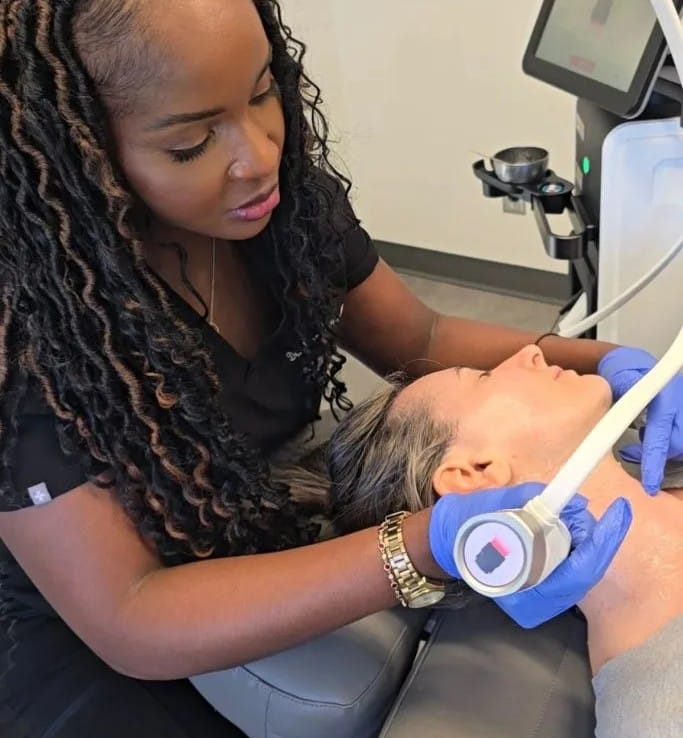
Clinically speaking, we may use something like the Cynosure Ultra laser to improve the overall quality of your skin and help stimulate collagen production in a way that complements the entire rejuvenation process while utilizing technologies like XERF to apply more directed heat to deeper layers of tissue for actual skin tightening.
Both can work well independently of one another but are used together in most treatment plans because of their collective benefits, not as a standalone solution for everyone that walks through the door.
Instead of trying to decide “what’s best” out the gate, let’s take a second to figure out what actually works… and how.
Key Takeaway: What actually tightens loose facial skin?
Bottom Line Up Front: If you want your face to LOOK tighter/firmed up…
Here’s the truth:
Only treatments that encourage collagen growth deeper in the skin will actually tighten your skin
The best options for NON-Surgical skin tightening are typically:
- Radiofrequency treatments (XERF) for structural tightening
- RF microneedling for structure + skin texture
- Certain lasers (Cynosure Ultra) for collagen support and overall skin quality
- Skincare can make your skin LOOK better, but won’t actually tighten loose skin
…and probably more important:
What truly works for tightening your skin is determined less by what’s trending and more by what your face actually requires.
If your face looks less firm lately, what’s actually changing?
Why skin begins to sag (even slightly)
Skin elasticity is largely structural. Collagen provides strength. Elastin provides resilience.
As we age, both diminish. Not significantly… just enough that skin no longer “snaps back” into place like it used to.
Combine that with a touch of fat redistribution and thinning, and you get the softened appearance that most notice but can’t pinpoint the cause of.
Areas where people typically notice it first
The face usually softens in stages:
The jawline becomes less defined.
The lower cheek area begins to droop slightly.
Smile lines appear deeper, even when not smiling.
The face appears “less lifted”.
It often seems gradual… until suddenly it doesn’t. Skin sagging isn’t typically something you notice every day.
You start to notice it in pictures. Silhouettes. Bad lighting. Off guard moments in the mirror.
And that’s typically when the question enters your mind: Is this something skincare can help correct… or do I need to go a step further?
Skin tightening vs resurfacing vs wrinkle treatments (this is where most articles get it wrong)
Skin tightening = firmer and mild lift
It targets deeper skin layers with heat to stimulate collagen remodeling. The result is a gradual tightening effect for a more toned appearance.
On the other hand, skin resurfacing treats:
- Texture
- Tone
- Discoloration
- Surface imperfections
These procedures, like the Cynosure Ultra laser, can help stimulate collagen production as well. But they primarily improve the skin’s surface appearance and texture.
Why you should know the difference when choosing treatments
Here’s where people’s expectations get off-track: If you have loose skin around your jawline, a resurfacing treatment won’t solve that issue on its own.
If you have dull, uneven, “crepey” skin, a skin tightening treatment might not be enough to treat that on its own.
Many people need some of both treatments. They just need to find the right balance.
Lire: Thinking About Laser Resurfacing in Eastern Ontario? How Young Does It Really Make You Look?
What are the most effective non-surgical face skin tightening treatments?
Radiofrequency (RF) skin tightening
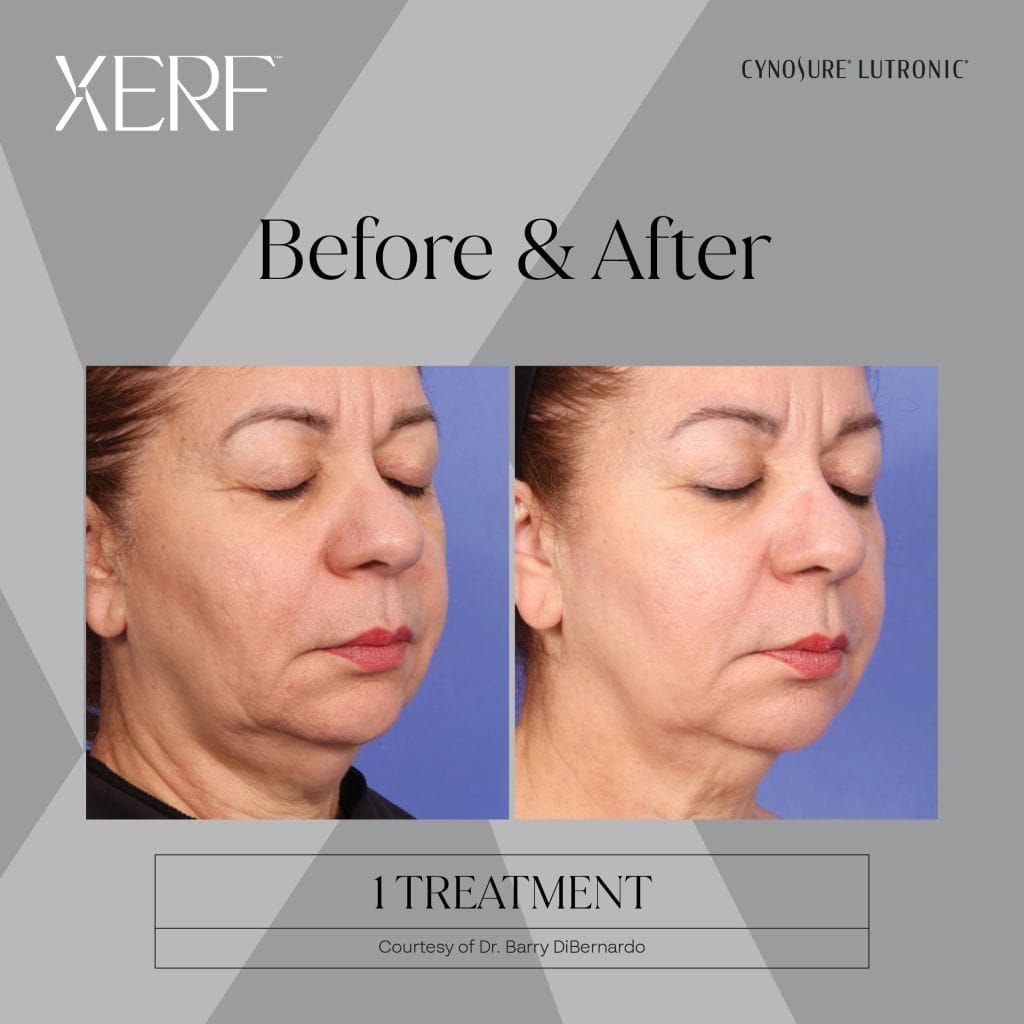
Simply put: this is the most straightforward method of tightening.
RF treatments apply controlled amounts of heat to the deeper layers of skin to stimulate collagen production overtime.
Des traitements comme XERF will do this with little to no downtime, specifically to improve structural firmness.
Ideal for:
- Mild to moderate skin laxity
- Softening along the jawline
- Early stages of lower-face sagging
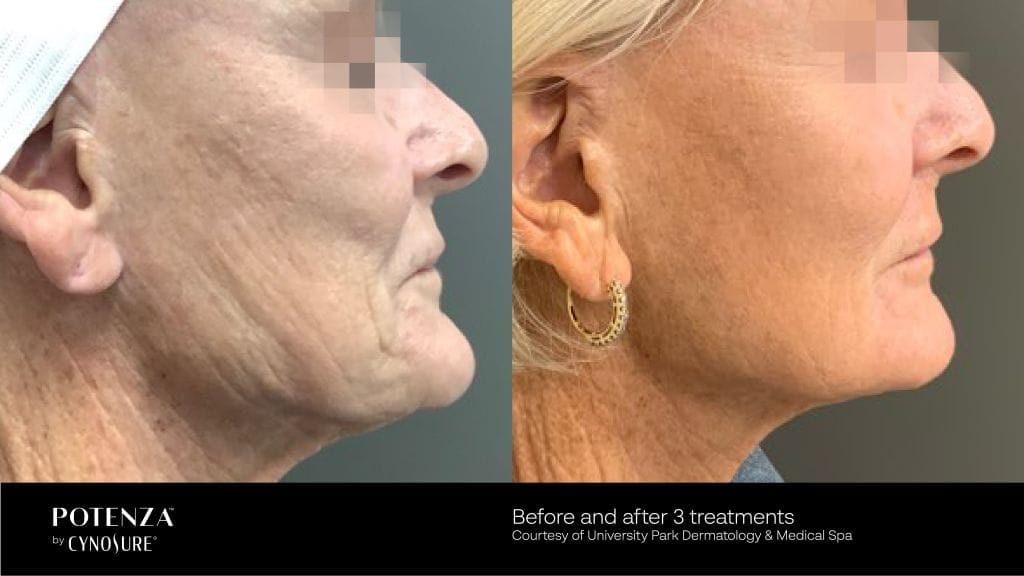
RF microneedling (example: Potenza®)
Two things happen here: Microneedles penetrate the skin to allow deeper penetration, and radiofrequency energy heats the area to stimulate collagen production.
This makes the treatment stronger than topical solutions.
Ideal for:
- Skin that feels “bumpy” or loose
- Fine lines coupled with mild laxity
- Targeted areas that need deeper remodeling
Laser-based treatments (where do they fit in?)
There are a lot of misconceptions about laser skin tightening.
Treatments like the Cynosure Ultra can be fantastic for:
- Skin texture
- Skin tone
- Collagen stimulation in the more superficial-to-mid depth ranges
But will usually support firmer skin rather than be the primary treatment for laxity.
Ultrasound-based tightening
These aren’t talked about as much but are worth mentioning.
They work on deeper structural levels of the skin to induce tightening.
Treatments in this category tend to be more targeted, slower acting (visible results), and used only in certain scenarios
Lire: RF Microneedling vs. Ultherapy: Which Skin Tightening Treatment Works Best?
Creams and skincare (?)
Skincare can help, they just can’t do everything people want them to.
Skincare can:
- Help hydrate the skin
- Help improve skin texture
- Provide a mild appearance of firmer skin
Skincare cannot:
- Pull up loose skin
- Restore any lost structure
Which treatment makes the most sense for your face?
Keep in mind that this is where it gets less about classifications… and more about your individual concern.
If you have early jowls/jawline softening
You have structural laxity.
Tightening focused treatments like XERF or RF-based treatments make more sense.
Loose-feeling skin with dull/uneven appearance
This is a mixed concern.
You’re losing firmness as well as surface texture.
A combination of:
Laser skin resurfacing (ie Cynosure Ultra)
With a tightening treatment
…often works better than either one independently.
Fine lines & crepey texture are your primary concern
This cosmetic concern is related to surface aging. Laser treatments like Ultra tend to do well in these circumstances.
You have noticed general facial “droop”
This is where realistic expectations come into play.
Non-surgical treatments can enhance firmness and improve definition… but they won’t turn back the clock to a lifted appearance achieved by surgery.
However, they can still be significant enough for many patients to feel like themselves again.
How much tightening can you realistically expect?
Mild vs Moderate Laxity
Best results with mild laxity
Moderate laxity still sees improvement, but less dramatic
Let’s talk about what “noticeable improvement” really means.
It’s not going to be dramatic tightening.
It will be more like:
- Feeling firmer.
- Noticeably more defined shape
- Skin that appears more “tightened”
When non-surgical can’t promise too much – If skin laxity is severe, you won’t get huge changes.
That’s not to say non-surgical treatments are pointless for severe skin laxity… but your expectations should be realistic.
How many sessions do you need and how long do results take?
For the majority of non-surgical face skin tightening options, multiple treatments are needed. Results take time and are usually not immediate, often taking several weeks to a few months to become noticeable.
Once desired results have been achieved, periodic treatments help maintain skin firmness over time. How many treatments you’ll need varies by treatment type and what you’re treating.
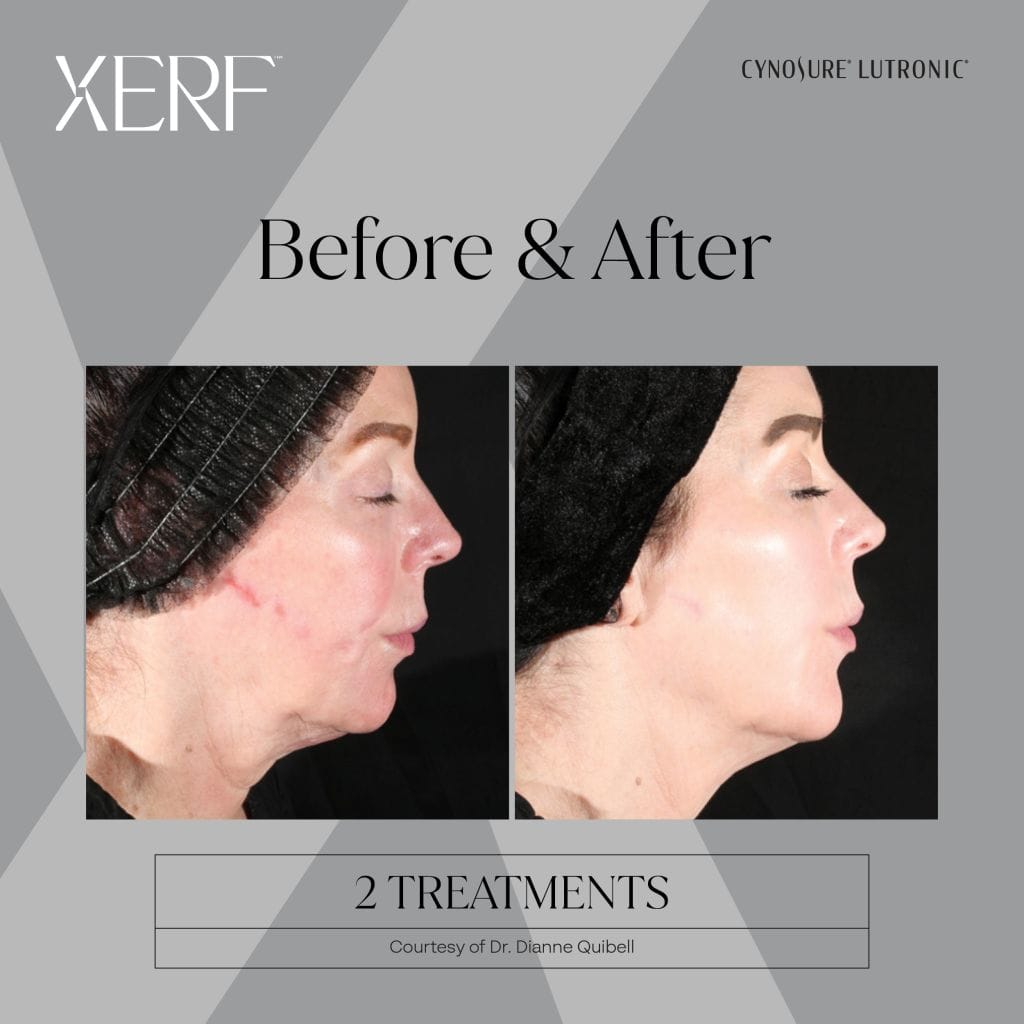
Radiofrequency options are typically performed as series that are spaced out over weeks/months. RF treatments rely on low-level heat-based energy to stimulate collagen production over time.
RF microneedling generally requires fewer treatments, but each session takes longer since the energy is delivered deeper into the skin.
Lasers fall somewhere in the middle. Some protocols involve treating in series (especially when treating for overall skin quality), while others may allow you to space out treatments depending on your skin’s response and what you’re treating.
Don’t expect instant results. Unlike treatments that provide immediate visible changes, XERF works gradually by stimulating collagen remodeling over time.
Most patients begin noticing early improvements around three to six weeks, with the skin appearing slightly firmer, smoother, and more refined.
Later on, between the two to six-month mark, is usually when you’ll start to see more dramatic results as collagen production continues below the skin’s surface.
That’s just how this type of treatment works. You’re not waking up the day after with a completely different face. You’re gradually training your skin to improve itself.
Keep in mind that these results won’t last forever. Our skin continues to age, and collagen production will decrease naturally over time. These treatments simply buy you some time.
With regular maintenance treatments (that are typically less frequent than your initial treatment phase), many patients are able to maintain that tighter, more lifted appearance without having to “start from scratch.”
Are these treatments safe for all skin tones?
The vast majority of skin tightening technologies are safe and effective for all skin tones.
Safety, however, has less to do with the device and more to do with how it is applied. Side effects are not typically about treatments simply “not working”.
Instead they involve potential changes in pigmentation if the energy levels, settings, or technique are not appropriately adapted to your skin.
This can be of particular concern with deeper skin tones, as they tend to react more to heat or light-based treatments.
Fortunately, most modern treatments take this into account. As an example, radiofrequency-based tightening treatments are safe (and EFFECTIVE!) for all skin tones.
Modalities like XERF target water, and not pigment in the skin, which allows us at Dr Lian Beauté to use them on all clients.
Laser-based treatments can also work for darker skin types, they simply need to be more tailored to your skin and concern.
This is part of the beauty of having experienced professionals on your side. The right treatment used appropriately can be both SAFE and EFFECTIVE….. it’s just not one setting fits all!
Can you combine skin tightening with other treatments?
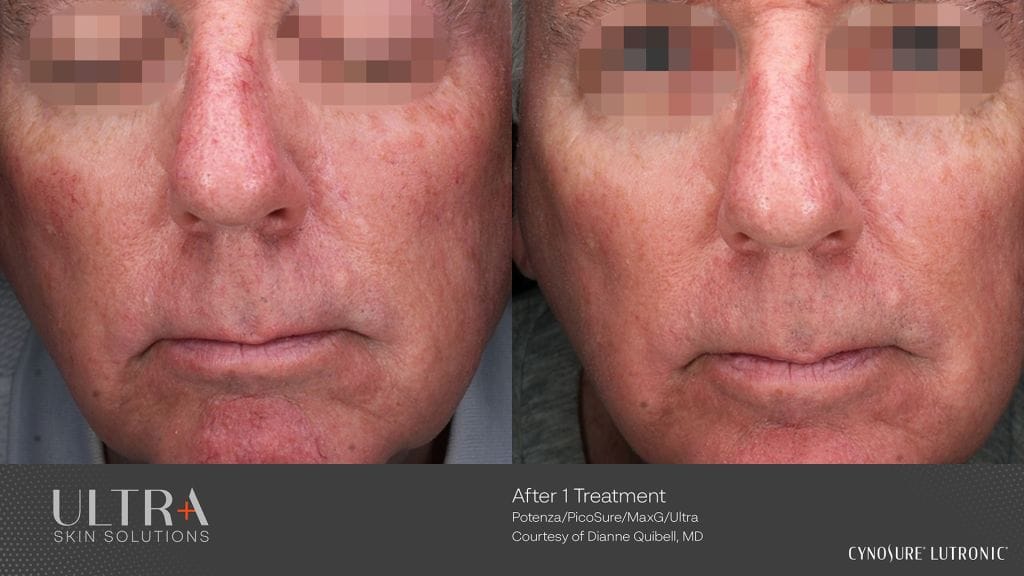
Yes, and in many cases, combining treatments is what leads to more balanced and natural-looking results. Skin concerns rarely show up in isolation.
What feels like “loose skin” is often a mix of mild laxity, uneven texture, and sometimes pigmentation changes.
When you address only one layer of the problem, the result can feel incomplete.
That’s why combining a structural treatment like XERF, which focuses on deeper skin tightening, with something like the Cynosure Ultra laser, which improves surface texture and overall skin quality, can create a more cohesive improvement across the face.
The idea isn’t to do more for the sake of it. It’s to match the treatment approach to how the skin is actually behaving.
For example, RF microneedling may be paired with laser treatments when both tightening and resurfacing are needed, while laser treatments can also be supported with medical-grade skincare to maintain results and improve overall skin function.
When done thoughtfully, these combinations tend to look less “treated” and more like your skin simply looks healthier and firmer.
That said, combination treatment isn’t always necessary. If your concern is very specific and still in its early stages, a single, well-chosen treatment can be enough to get the result you’re looking for.
Creams vs professional treatments: what’s actually worth it?
Skincare can help your skin look better, but it cannot tighten skin in any physical way.
When it comes to tightening skin or addressing facial firmness/concerns about structure, that’s where you’ll see results with professional treatments.
…but skincare is still important. Retinoids, peptides, antioxidants. They can all help boost collagen production over time, hydrate the skin, and improve its appearance by making it look smoother and more even.
When skin is optimally hydrated and functioning at its best, it will look healthier overall… nicer.
A little more “put together.” Sometimes that’s enough for kickstarting results, or taking care of your skin after you address a concern with treatment.
So where do you cross that line? When does someone go from “my skin looks fine” to “okay, I guess it’s time.” When there’s actual laxity.
When the skin doesn’t feel as tight, feels less supported, or like it’s dropped slightly. A cream is not going to reverse that.
Sure, it can sit on the surface of your skin and maybe trick you into thinking it looks a little better, but it won’t penetrate deep enough to actually tighten. Topical creams can at best give you a temporary improvement in the appearance of your skin. At worst, they can stall you from taking action on something you already know you need to do.
Which brings me to where most people decide to take that step. Not when their skin “looks bad.” But when it looks good. When it looks just…. less firm than you remember it being.
There’s something about that feeling of everything looking okay, but you knowing something is “off” underneath that makes people take action.
Enter treatments like RF-based tightening or any collagen stimulating treatment. We’re not replacing skincare here. We’re fixing what skincare can’t. And honestly, in most cases you’ll want to be doing both. One to help your skin on the surface, and one to help rebuild what’s happening beneath.
How to choose the right skin tightening treatment in Ottawa & Eastern Ontario
The best skin tightening treatment for you is the one that fits your type of facial laxity, your goals, and your timeline – not the latest trendiest device or celebrity endorsed treatment.
That’s sort of the gist of it.
When you break it down and really understand what these treatments can do for your skin, picking the right one becomes much simpler.
One starting point worth mentioning – because it’s honestly so important – is understanding what type of laxity you have.
Skin that is just starting to loosen along your jawline or cheekbones is going to look and behave very differently than more severe sagging. And that can change which treatments are a good match by much more than people realize.
There are options that do an amazing job with mild firmness/signing maintenance, and others that focus on the deeper levels of structure.
If they don’t lay that out for you pretty clearly in your consultation, you’ll be hard pressed to find something that targets what you’re actually looking to improve.
This leads us into another question people don’t always verbalize, but is usually on their mind: what result is realistic?
There are a lot of times people say they want more from a treatment, and when you get down to the details you realize they thought skin tightening was the same thing as lifting.
Don’t get me wrong, non-surgical skin tightening can have dramatic results. It can significantly improve the firmness of your skin, sharpen facial contours, and leave your face looking more “complete.”
But it isn’t injecting fillers or surgical lifting. A consultation that isn’t overtly selling you something will explain that difference to you.
If they paint every result like it’s dropping jaws in the waiting room, consider holding off and getting another opinion.
The number of appointments required is another detail that holds more weight than most clients realize.
A lot of treatments are designed to be done in series, creating collagen slowly over time. Other treatments are more powerful, but can still benefit from repeat treatments as well.
It’s not a bad thing! That’s just the nature of non-surgical solutions.
What’s important is that your provider explains that from the start, so you know how long to expect before you start seeing changes and how much of a commitment you should be prepared to make.
…and this is kinda a subtler piece of it, but how your clinic approaches those decisions.
Consultations at clinics that take this method seriously aren’t pitched around one specific device or treatment.
They’ll typically go over options, explain to you why you might be better suited for one than another. There will be trade-offs discussed. Not everything they offer is the absolute “best” for every person that walks in.
Lastly, you’ll feel like the conversation is customized more than choreographed. If you’re being pushed towards one treatment because that’s what THEY think is best, you’ll know.
But when they take the time to understand your skin, your concerns, and even the types of downtime you’re willing to accept, it doesn’t feel like you’re being forced into a predetermined treatment package. It feels like one is being built around you.
If you live in Ottawa or anywhere else in Eastern Ontario, you have access to all of these wonderful technologies.
So when you start researching clinics, I’d argue that attention to detail becomes more important than the treatment itself. Because once you have the chance to access all of these treatments… it becomes about what suits YOU best.
Questions fréquemment posées
So what’s the best non-surgical treatment to tighten your face?
Again it depends on your type/location of laxity and severity. In general radiofrequency-based treatments create a great tightening response. RF microneedling leads the industry in tightening. Lasers can help with collagen stimulation and overall skin quality.
Does laser skin tightening actually tighten your skin?
Lasers will improve collagen stimulation, which improves your skins texture, but may not necessarily tighten skin as much as other options depending on your skin laxity.
Is RF Microneedling stronger than laser tightening?
Yes microneedling has been shown to create a stronger tightening response due to the deeper penetration. Lasers work better with the upper dermis and improving skin quality.
How long will skin-tightening results last?
Anywhere from a few months up to a year or more. Continual treatments will keep collagen production ongoing.
How early can you start skin tightening?
There is no exact age you should start. You should start when you start to see the changes you don’t like. Typically, that’s around your 30’s or 40’s.
Do skin tightening creams work?
They can hydrate the skin and improve the appearance of skin quality but will not physically tighten the skin.

La Dre Lian Peter, M.D., MPH, CCFP, est une médecin de famille passionnée par l'esthétique. Dans sa clinique d'esthétique, elle propose une vaste gamme de procédures mini-invasives et non invasives, perfectionnant constamment ses compétences pour offrir des soins exceptionnels et aider les patients à obtenir l'apparence souhaitée.


 FR
FR  EN
EN