Laser skin resurfacing often gets described in dramatic terms. Ten years younger. Twenty years younger. A total reset.
In reality, treatments like Ultra are better understood as a way to improve overall skin quality and soften visible signs of aging, not to replace surgery or completely change facial structure.
For people in Eastern Ontario and the United Counties of Prescott and Russell, the real question is usually more practical: what kind of results are realistic, how many treatments are typically needed, and whether the investment actually makes sense close to home.
If you’re considering laser resurfacing in this region, this article breaks down what outcomes commonly look like, how the treatment process works, and how to decide if it’s worth it for your skin and your goals.
Principaux points à retenir
- Laser resurfacing does not erase a fixed number of years. It improves visible signs of aging like tone & texture, dommages causés par le soleil, et ridules, which can make skin look a few years younger overall.
- Results are skin-deep, not structural. Resurfacing enhances skin quality but does not lift sagging tissue or replace surgical procedures.
- Non-ablative options like Ultra deliver gradual, cumulative improvement with controlled downtime, unlike ablative lasers such as CO₂, which remove skin layers and require longer recovery.
- One session can improve brightness and texture, but most patients need a series of treatments to achieve and maintain meaningful results.
- Laser resurfacing is often used as a foundational treatment in Canada and may be combined with other modalities, such as neuromodulators, fillers, or RF microneedling, depending on goals and skin condition.
- Ultra is a balanced resurfacing option for patients who want noticeable improvement without aggressive tissue removal or prolonged downtime.
How Many Years Does Laser Resurfacing Really Take Off and How Much Younger Will You Look?
Laser resurfacing does not take a fixed number of years off your face. Instead, it improves the visible skin changes that tend to signal aging, such as uneven tone, sun damage, rough texture, and fine lines.
When these surface-level markers are softened, the skin often looks healthier, smoother, and more refreshed.
For most people, that reads as looking a few years more rested or rejuvenated, rather than dramatically “reset” by a decade or more.
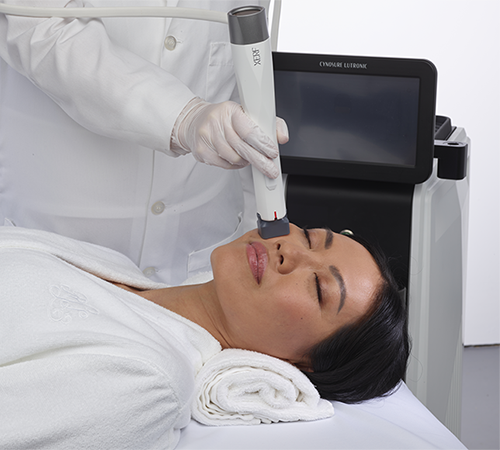
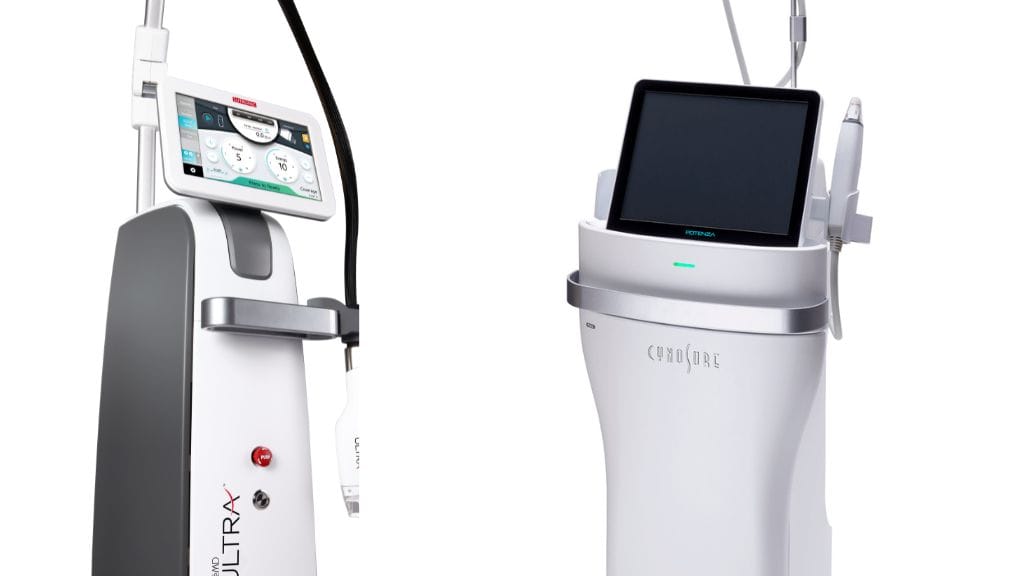
Des traitements comme Ultra fall into the category of non-ablative fractional laser resurfacing. Ultra uses a 1927 nm wavelength to create controlled microchannels beneath the skin’s surface without removing layers of skin.
This process encourages gradual skin renewal in the upper layers, rather than forcing an aggressive resurfacing response.
One advantage of this approach is that the microchannels created during treatment can help enhance the absorption of topical ingredients applied afterward. Products such as vitamin C, retinol, tranexamic acid, and resveratrol are often used to support skin tone, texture, and overall quality as the skin recovers.
Unlike ablative lasers, such as CO₂ lasers, which physically remove skin and require longer recovery, non-ablative treatments like Ultra work progressively. The changes are subtle at first, then become more noticeable over time as the skin continues to renew itself.
It’s also important to set the right expectations. Laser resurfacing improves skin quality, not facial structure.
Ultra does not lift sagging skin or replace surgical procedures, but it can significantly improve how even, bright, and youthful the skin itself looks — which is often what people notice first.
What Procedure Takes 10 Years Off Your Face?
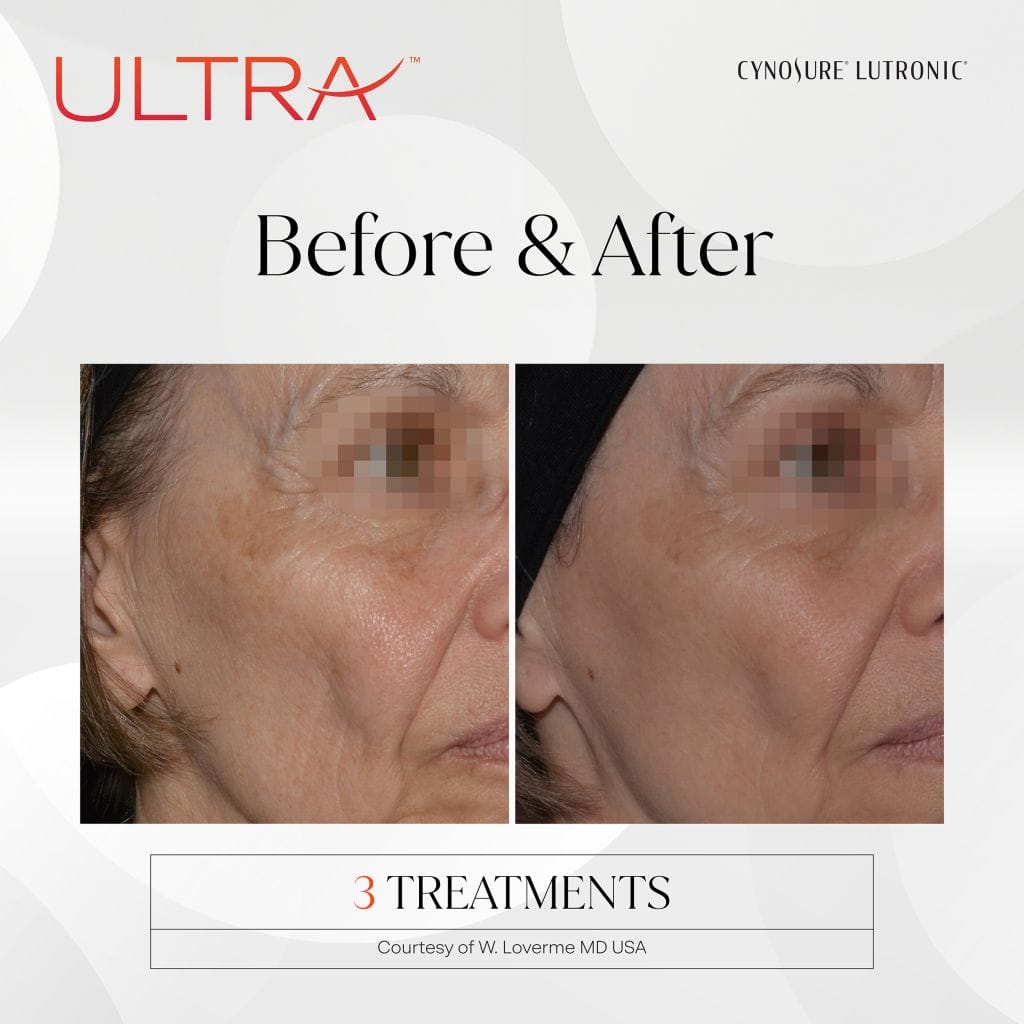
No single non-surgical procedure reliably removes ten years of aging on its own.
Laser resurfacing can play an important role in creating a more youthful appearance, and for patients in and around the United Counties of Prescott and Russell in Eastern Ontario, it is often chosen as a foundational treatment for improving skin quality without surgery.
It’s typically part of a broader, medically guided cosmetic plan and may be combined with other treatments based on skin condition, goals, and clinical assessment, such as neuromodulators for dynamic wrinkles, dermal fillers for volume support, or collagen-stimulating options like RF microneedling.
You may also like: Qu'est-ce que le microneedling RF Potenza : le secret d'une peau parfaite
Is Laser Resurfacing Worth the Money?
For patients in Limoges, Embrun, Russell, Casselman, and the Ottawa area, skin rejuvenation options often range from chemical peels and microdermabrasion to non-invasive energy-based treatments.
While these can help with isolated concerns, laser resurfacing is often considered worth the investment because it addresses multiple visible signs of aging at once, including uneven tone, sun damage, early fine lines, and texture changes, in a single, targeted treatment plan.
Ultra stands out for its precision, customization, and minimal downtime, making it a practical option for people who want meaningful improvement without frequent appointments or major disruption to daily life.
It can also be safely used on all skin types, including patients with melasma, which broadens its value for individuals who may not be candidates for other resurfacing approaches.
For those seeking gradual, natural-looking enhancement of skin quality that can be maintained over time, laser resurfacing is a cost-effective long-term choice rather than a short-term fix.
Will I Notice a Difference After One Session Of Laser Skin Resurfacing (and Is One Session Enough?)
Yes, many patients notice some improvement after a single session, particularly in skin brightness and texture.
However, one session is rarely considered “enough” for long-term correction.
Clinical guidance often recommends a series of treatments, commonly ranging from 3 to 6 sessions, depending on skin concerns and goals.
The exact number of sessions required varies by patient and treatment protocol and should be confirmed during a consultation.
Results also build over time as the skin continues its renewal process.
Ultra and Other Laser Skin Resurfacing Options
Laser resurfacing is not a single treatment. It exists on a spectrum, ranging from aggressive ablative lasers to more controlled resurfacing technologies designed for gradual, predictable improvement.
Traditional ablative lasers, such as CO₂ systems, work by removing layers of damaged skin to trigger renewal. They can deliver dramatic results, but they come with longer downtime, higher aftercare demands, and greater short-term disruption to daily life.
These treatments are typically chosen for deeper wrinkles, advanced sun damage, or significant textural concerns, and they require careful patient selection.
Fractional lasers, including platforms commonly known by brand names like Fraxel, sit somewhere in between. Depending on the specific device and settings, they may be non-ablative or partially ablative.
Results are usually cumulative and achieved over a series of treatments, with downtime that can range from mild redness to several days of visible healing.
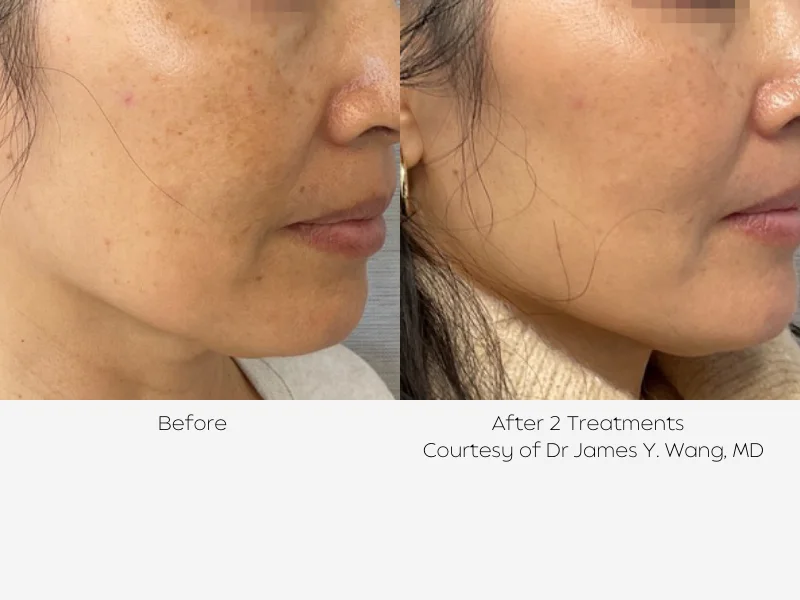
Ultra, by contrast, is used at our Limoges-based clinic as a focused resurfacing option for patients who want meaningful skin-quality improvement without aggressive tissue removal.
Rather than stripping away skin, Ultra works by stimulating renewal below the surface, targeting fine lines, uneven texture, and overall skin clarity with a more predictable recovery window.
This is why Ultra is the primary resurfacing laser used in our practice. It offers a balance many patients are looking for.
Noticeable improvement, controlled downtime, and results that integrate naturally with long-term skin maintenance, rather than forcing recovery around a single intensive procedure.
For patients who are not candidates for ablative lasers, or who prefer refinement over dramatic downtime, Ultra is often the most appropriate starting point for laser resurfacing.
Is Laser Resurfacing Good For Your Skin?
If concerns like texture irregularities, early to moderate lines, or accumulated sun damage are starting to bother you, resurfacing can be a practical next step.
In Canada, treatment decisions are often shaped by lifestyle and recovery tolerance as much as results.
Many patients prefer options that deliver visible improvement while still fitting into work and daily routines, which is why controlled resurfacing treatments like Ultra are commonly chosen.
The right approach depends on your skin history, your expectations, and how much downtime you’re comfortable with.
A consultation allows those factors to be assessed properly, and helps determine whether resurfacing alone makes sense or whether it should be part of a broader treatment plan.
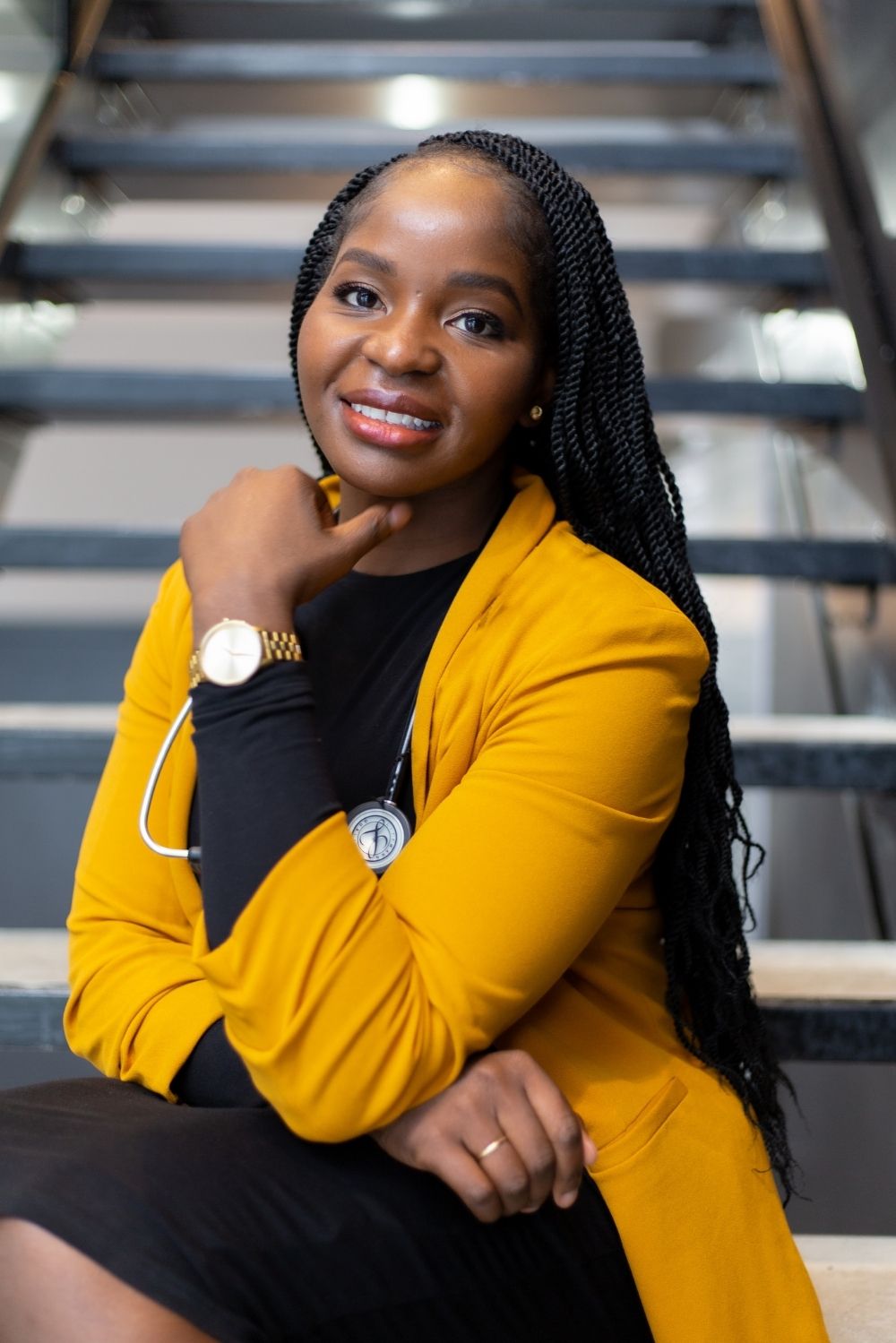
La Dre Lian Peter, M.D., MPH, CCFP, est une médecin de famille passionnée par l'esthétique. Dans sa clinique d'esthétique, elle propose une vaste gamme de procédures mini-invasives et non invasives, perfectionnant constamment ses compétences pour offrir des soins exceptionnels et aider les patients à obtenir l'apparence souhaitée.
 FR
FR  EN
EN