TL;DR: Fall is an ideal time for post-summer skin recovery and corrective treatment. For patients in Ottawa, Limoges, Embrun, Russell, and Casselman, the best fall skincare treatments for sun damage, pigmentation, and skin rejuvenation may include LaseMD Ultra Laser Resurfacing, chemical peels, microneedling, RF microneedling, XERF skin tightening, and medical-grade skincare, depending on your skin concerns.
Summer feels like the season most people anticipate all year long.
The cottage weekends. Pool days. Patio dinners. Vacation. Being outside more.
Your skin isn’t so lucky.
Despite your best efforts slathering on sunscreen all summer, prolonged exposure to UV rays, heat, humidity, sweat, chlorine, and environmental stress takes its toll on skin.
By fall, many people start to notice problems that weren’t present at the beginning of summer: persistent pigmentation, dullness or uneven skin tone, dehydration, rough texture, fine lines, and skin that just looks exhausted.
That’s why many medical aesthetic clinics view fall as one of the best seasons for skin rejuvenation treatments.
Thanks to lower levels of UV rays and cooler temperatures, your skin can heal more comfortably from procedures that address sun damage, pigmentation, collagen deterioration, and overall skin quality.
In this guide, we’ll explain:
- How summer ages your skin
- Why fall is the ideal time for skin rejuvenation
- Skin rejuvenation treatments to consider after summer
- The difference between treating sun damage and restoring collagen
- How procedures like LaseMD Ultra Laser Resurfacing, XERF Skin Tightening, micro-aiguilletage, peelings chimiques, and medical-grade skincare can restore a more youthful appearance
How Pre-Summer Prevention Differs From Post-Summer Repair
Most skin rejuvenation treatments can be done year-round, including throughout the summer months. However, many patients begin their treatment before the summer months in preparation for vacations, weddings, time outdoors, and exposure to the sun.
As the weather changes, the focus of your treatment may change as well.
Pre-summer:
If you are looking to treat your skin before summer, you will most likely be focused on prevention and preparing your skin for the summer. Common treatments performed before the summer months include épilation au laser, RF microneedling, chemical peels, and laser facials.
These treatments improve pigmentation, increase collagen production, improve skin texture. It is best to complete a series of treatments before spending prolonged periods of time outdoors.
Post Summer:
Once summer passes, the focus usually shifts to correction and recovery from summer.
UV exposure, heat, humidity, chlorine, and other environmental stressors all take a huge toll on our skin. These factors can leave our skin looking discoloured, dehydrated, rough, and with increased visible signs of aging.
In this article, we will discuss the post-summer side of skincare and why fall is one of the best times to treat those unwanted effects of summer.
Lire: Comprendre les coups de soleil : types, risques, prévention et traitement
Why Summer Can Leave Your Skin Looking Older Than It Did in Spring
Because we live in a place with four seasons. Ontarians tend to flock to the outdoors to make the most out of the sunshine.
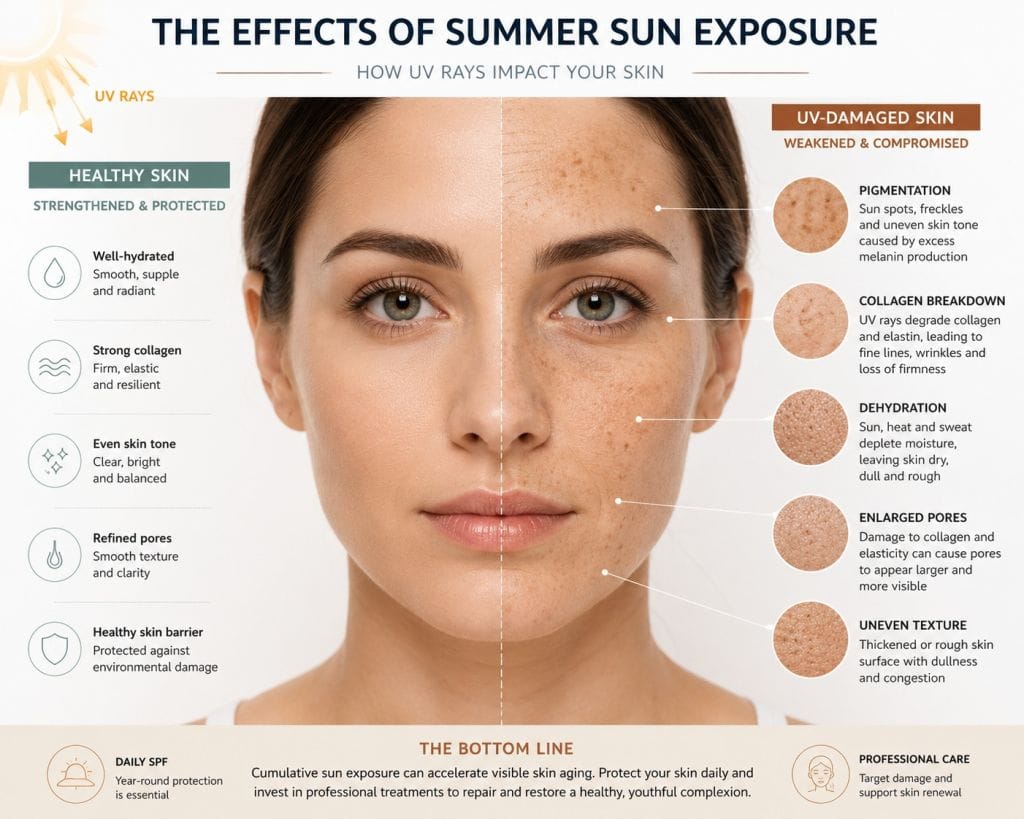
Summer weather has a way of making your skin look older than it did when spring first arrived. All that repeated exposure to UV rays, heat, and environmental stressors takes its toll by breaking down collagen and your skin’s natural support systems, thus amplifying damage that can be seen on the surface.
We know you’ve been slathering on sunscreen like it’s your job, but even the healthiest skin can succumb to environmental stressors over the summer months. Between extended periods in the sun, higher temps and humidity, chlorinated pools, and AC blasts, not to mention more time spent outside than you might realize—your skin can look and feel vastly different by fall.
The signs of wear and tear can be subtle at first. Perhaps your complexion seems less bright. Maybe fine lines appear more prominent. Or your skin may just look duller and feel drier than it did a few months ago.
Here’s a closer look at some of the factors that can age your skin over the summer season:
Cumulative sun exposure. Ultraviolet (UV) rays can speed up collagen and elastin degradation.
Collagen and elastin are the proteins responsible for supporting skin’s firmness, smoothness, and elasticity. When collagen production slows and collagen fibers are damaged by prolonged sun exposure, your skin can lose some of its youthful architecture.
Sun damage can also exacerbate skin conditions that impact overall skin health:
- Sun exposure increases melanin production, which can cause sunspots or patchy pigmentation.
- Heat and environmental exposure dehydrate skin and damage its natural barrier.
- Sweat, sunscreen, and extra sebum can leave pores clogged and lead to breakouts. This can then be followed by post-inflammatory hyperpigmentation as acne lesions heal.
The end result? By the time fall rolls around, you may start to notice changes in your skin’s tone, texture, firmness, or overall glow. Therefore, fall is the opportune season to assess any damage incurred over the summer and to invest in skin treatments aimed at correction, revitalization, and enduring skincare.
Why Fall Is the Best Time to Address Summer Skin Damage
Are these issues treatable during the summer?
Absolutely, in many cases.
The reason that fall often sees an uptick in patients is that the weather cooperates better with recovery and aftercare. A large number of skin rejuvenation procedures require that you avoid too much sun exposure after treatment. With UV levels dropping and outdoor activities less centered around sunbathing, some patients feel it’s easier to keep their results protected and adhere to post-care directions.
This doesn’t mean you can only get treated in the fall. However, fall is the most optimal times to treat the visible effects of summer skin damage.
Think About it…
UV exposure is low, temperatures are cooler, you aren’t sweating as much, and you spend less time outside.
You’re in ideal recovery conditions for your treatment and have more time to prep your skin before the holiday parties and winter festivities begin.
Fall is so great, that many skin clinics view it as the unofficial beginning of “skin rejuvenation season.”
One Last Thing Before We Get Into Treatments… Not All Post-Summer Skin Concerns Are Created Equal
A huge mistake that patients make is believing that all their skin concerns can be addressed with the same treatment.
They’re not.
Concerns Like Sun Spots, Pigmentation, and Uneven Skin Tone. Treatments geared towards skin resurfacing and pigment correction tend to work best.
Treatments that fall into this category include: LaseMD Ultra Laser Resurfacing, Laser facials with the Elite IQ, Chemical Peels, and medical-grade Skincare Products.
For concerns like rough texture and acne scarring. You may benefit more from collagen-stimulating treatments.
Treatments that fall into this category include: Microneedling, RF Microneedling, and LaseMD ULTRA
Skin laxity and loss of firmness. Treatments with skin-tightening technology that focus on triggering your body’s natural collagen remodeling process from deeper within may yield the best results.
Treatments that fall into this category include: XERF RF Skin Tightening, biostimulating fillers like Sculptra and Radiesse.
Lire: Guide de soins de la peau pour l'hiver au Canada : 7 conseils d'experts pour une peau radieuse
Treatment #1: LaseMD Ultra Laser Resurfacing for Post-Summer Pigmentation and Sun Damage
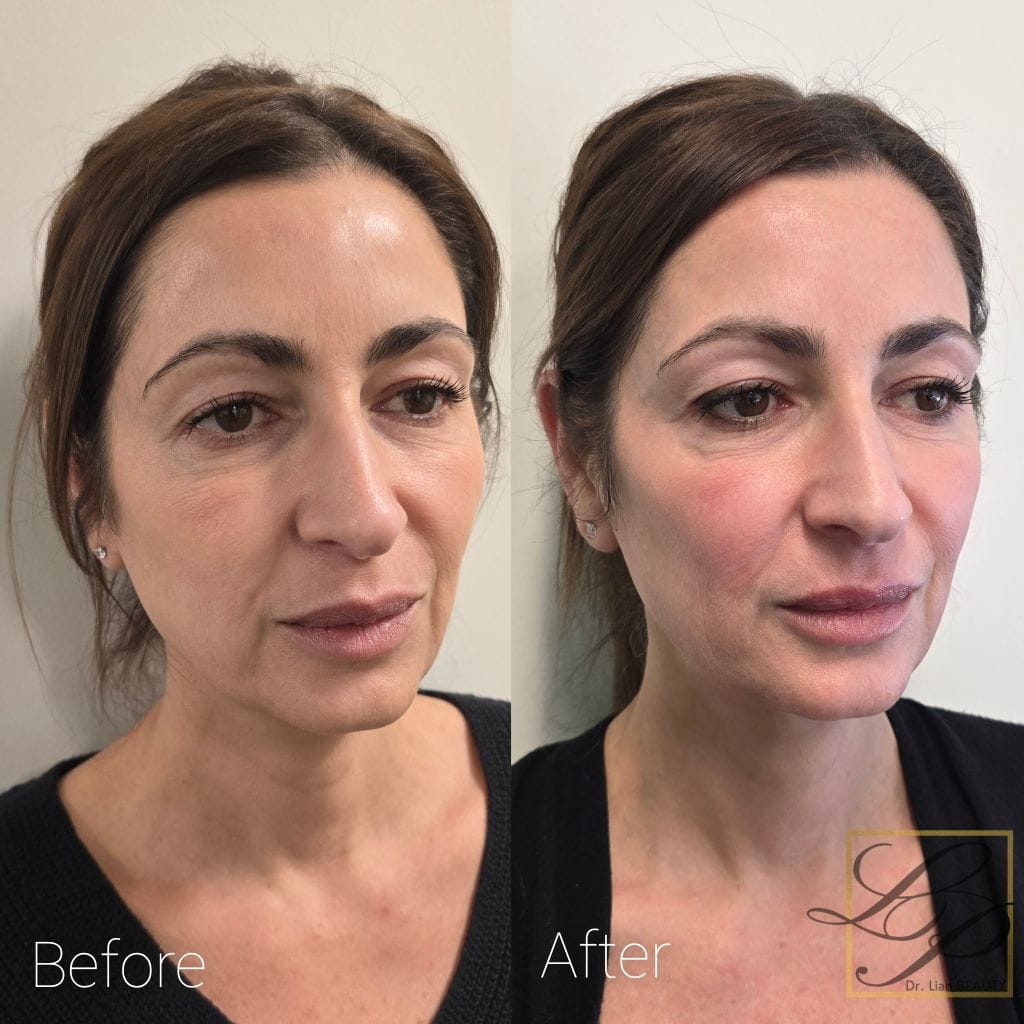
When pigmentation, sun spots, dullness, and uneven skin tone are your primary concerns, LaseMD Ultra Laser Resurfacing is often one of the most relevant treatment options to consider after summer.
Ultra uses advanced laser technology to create controlled microchannels within the skin. This process stimulates natural renewal while helping improve the appearance of surface-level imperfections associated with photoaging.
What LaseMD Ultra Can Help Improve
Post-summer patients often seek treatment for:
- Sun spots
- Taches de vieillesse
- Freckles
- Teint irrégulier
- Dull skin
- Mild texture irregularities
- Early signs of aging
Because the treatment focuses on skin renewal rather than aggressive ablation, many patients appreciate its ability to improve skin quality with relatively minimal downtime.
Why Fall Is an Ideal Time for LaseMD Ultra Treatments
If your skin concerns include pigmentation, sun spots, dullness, and uneven skin tone, LaseMD Ultra Laser Resurfacing may be one of the most applicable treatments for you this fall.
Ultra works by using laser technology to create microchannels in the skin. This controlled injury triggers natural renewal, helping to reduce the appearance of surface imperfections caused by photoaging.
Benefits of Scheduling a LaseMD Ultra Treatment in the Fall
It’s always recommended to avoid excessive sun exposure after laser skin treatments.
That’s why fall can be the ideal time to get laser skin resurfacing with LaseMD Ultra . During this season, patients can find it easier to:
- Avoid direct sun exposure
- Adhere to post-treatment instructions
- Maintain their results
- Prevent new pigmentation from forming
If you’re looking to reverse the effects of summer sun damage, scheduling treatment in the fall is ideal.
Lire:Choosing Between LaseMD Ultra Laser Resurfacing and Potenza RF Microneedling in Eastern Ontario
Treatment #2: Chemical Peels for Post-Summer Pigmentation and Skin Renewal
Chemical peels have traditionally been one of the most effective ways to diminish visible signs of sun damage. In fact, many providers schedule peel treatments in the fall and winter since patients can better avoid excess UV exposure while they recover.
Chemical peels cause controlled exfoliation and faster skin cell turnover by applying a proprietary formula directly to the skin. As dead surface cells slough off, healthier skin cells are revealed underneath.
4 Reasons Why Chemical Peels Are Good After Summer
Chemical peels can improve the appearance of patients dealing with:
- Sun-induced hyperpigmentation
- Teint irrégulier
- Fine lines
- Rough texture
- Cicatrices d'acné
- Dullness
By shedding the damaged upper layers of skin, peels can reveal a brighter complexion. Smoother skin that continues to produce collagen over time.
Lire: Peeling chimique pour peau foncée : 7 précautions essentielles pour des résultats éclatants
Why You Should Consider Chemical Peels After Summer
Most superficial peels can be administered in any season. However, deeper peels heighten skin’s sensitivity to sunlight.
Since there is less UV exposure in the fall, patients who receive chemical peels during this season often see the following:
- Easier recovery
- Improved aftercare compliance
- Minimal risk of post-inflammatory hyperpigmentation
- More consistent results
Chemical peels are a great way to jumpstart your post-summer skin recovery regimen.
Treatment #3: Microneedling and RF Microneedling for Texture, Scars, and Overall Skin Quality
Not every skin concern comes from increased pigmentation over the summer.
Sometimes it’s skin texture that needs some extra TLC.
Maybe you’ve noticed your skin feels rougher than normal. Or acne scars feel more prominent. Even fine lines can feel deeper after months in the sun.
That’s where microneedling and Microneedling RF can help.
Microneedling works by creating thousands of microscopic mechanical channels in the skin using ultra-fine needles.
Your body’s natural healing response is triggered by these micro-injuries and results in the production of collagen, elastin, and new skin cells.
After a series of treatments, collagen remodeling can improve the skin’s texture and overall skin quality.
Microneedling is frequently used to treat acne scars, large pores, texture, fine lines, some mild pigmentation issues, and general skin rejuvenation.
What makes RF microneedling different? Radiofrequency energy is applied in addition to traditional microneedling. This energy is delivered deeper into the skin.
The thermal energy that is produced can further enhance collagen production and yield improvement in skin tightening, moderate acne scarring, skin texture, and early sagging skin
Patients looking for a more powerful solution may see added benefit with RF microneedling.
Lire: Comment le microneedling RF est la solution pour la peau abîmée par le soleil
Treatment #4: XERF Skin Tightening for Post-Summer Collagen Support
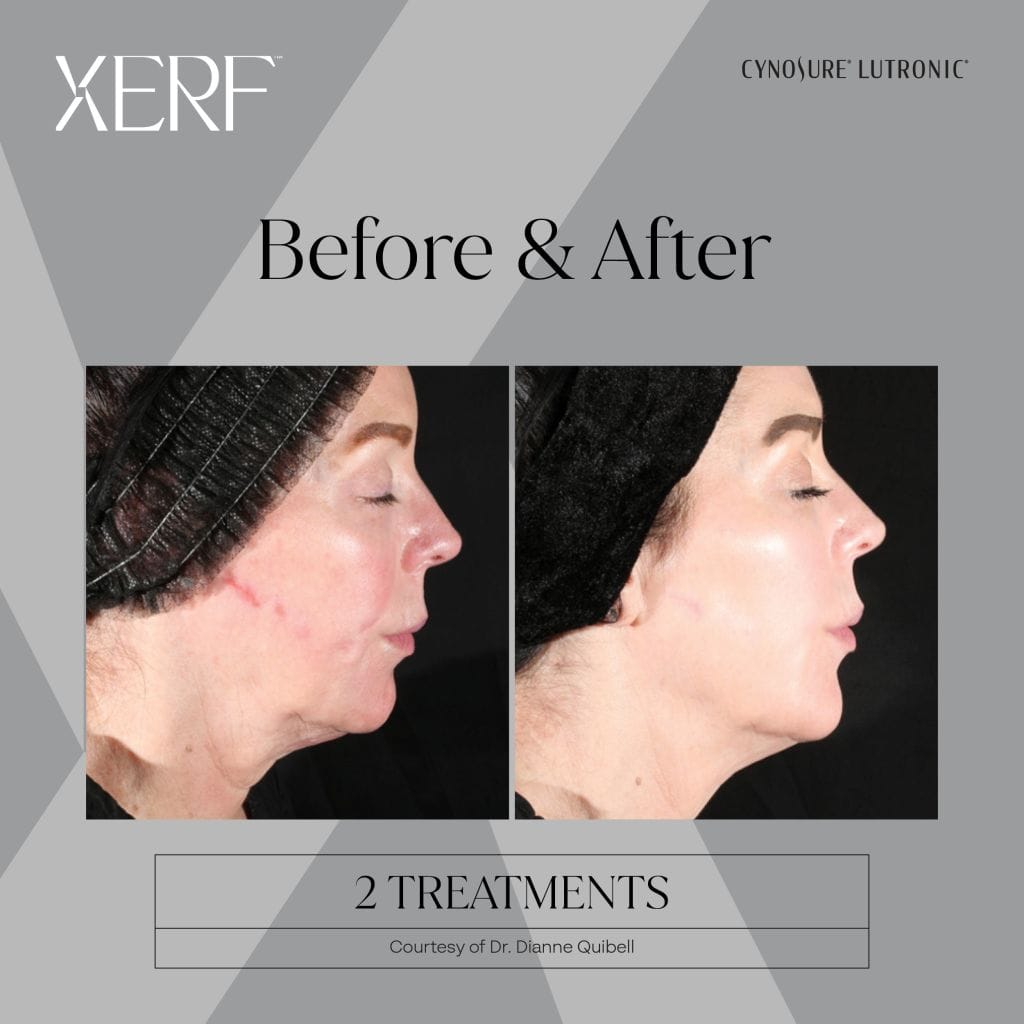
Most of us automatically think of pigmentation when we consider skin damage from summer fun in the sun. But the damage sunshine imparts on our skin goes beyond colour.
Cumulatively, ultraviolet rays also break down collagen. The gradual effects can include loss of volume, early signs of skin looseness, loss of facial definition, appearance of fine wrinkles, and diminished elasticity.
You might not notice many of these consequences until the fall season sets in.
XERF isn’t designed to target pigmentation or perform superficial skin resurfacing. Its approach is to stimulate collagen and tighten deep connective tissue. And It does so by applying painless radiofrequency energy to deeply heat up skin tissue without damaging the outer layer of skin.
Lire: How To Tighten Loose Facial Skin: Non-Surgical Face Skin Tightening in Ottawa & Eastern Ontario
Treatment #5: Medical-Grade Skincare to Support Recovery and Maintain Results
While professional treatments can give you amazing results, it’s important that they are coupled with a solid at-home skincare routine.
When you’re healing your skin after summer damage, you’ll want to not only reverse the damage but also help prevent future damage and keep your skin strong and protected.
Ingredients you may want to include in your customized skincare routine include, and are not limited to:
:
Vitamine C helps protect your skin from free radical damage and promotes a brighter, more even skin tone.
Retinoids promote cell turnover and collagen production. Retinoids are great for combating signs of photoaging.
Hyaluronic acid pulls moisture into the skin, assisting with post-summer rehydration.
Ceramides help restore the skin barrier and decrease moisture loss.
Broad-Spectrum Sunscreen. Just because summer is over doesn’t mean you should stop protecting your skin from the sun. Most pigmentation issues worsen when sunscreen use is discontinued.
For the long-term health of your skin, SPF should be part of your daily routine.
When Should You Start Treating Summer Skin Damage?
The most frequent mistake patients make is delaying the repair of this summer’s sun damage until the following summer.
Pigmentation, collagen depletion, and texture issues almost never get better on their own.
Starting treatment during fall allows you to:
- Address damage before it worsens
- Take advantage of lower UV exposure
- Improve skin quality during the cooler months
- Build collagen before next summer arrives
For many patients, fall and winter represent the most productive months of the year for skin rejuvenation.
Restore Your Skin After Summer
Summer memories should last. Summer skin damage doesn’t have to.
If you’ve noticed pigmentation, sun spots, uneven texture, dehydration, fine lines, or reduced skin firmness after months of sun exposure, fall may be the ideal time to begin treatment.
Whether your goals involve correcting visible sun damage with LaseMD Ultra Laser Resurfacing, improving texture with microneedling, restoring skin firmness with XERF Skin Tightening, or creating a comprehensive rejuvenation plan, the most effective approach starts with understanding what your skin actually needs.
A personalized consultation can help determine which treatments are best suited to your concerns, skin type, lifestyle, and long-term goals, allowing you to enter the colder months with healthier, stronger, and more radiant-looking skin.

La Dre Lian Peter, M.D., MPH, CCFP, est une médecin de famille passionnée par l'esthétique. Dans sa clinique d'esthétique, elle propose une vaste gamme de procédures mini-invasives et non invasives, perfectionnant constamment ses compétences pour offrir des soins exceptionnels et aider les patients à obtenir l'apparence souhaitée.


 FR
FR  EN
EN