When people think about laser treatments, they typically think that “skin rejuvenation” and “skin resurfacing” mean the same thing.
They don’t.
Going with one when you should have gotten the other wastes your time, money…and leaves you with disappointing results.
That’s why we want you to know the difference between laser skin rejuvenation vs. skin resurfacing – and more importantly what your skin needs – BEFORE you schedule anything.
Key Takeaway
Most patients don’t experience disappointing laser treatments.
They simply choose the wrong one.
Here’s how to make sure you don’t fall into that category:
Lasers for skin rejuvenation = brighter skin
(principally targets dark spots, redness, uneven skin tone)
Lasers for skin resurfacing = smoother skin
(principally targets acne scars, fine lines, skin texture)
…but here’s the part most clinics don’t tell you:
Not all skin resurfacing is created equal. There are options like Lutronic ULTRA Laser that can address skin texture concerns, stimulate collagen production, and target uneven tone too – all with FAR less downtime than traditional laser resurfacing.
So ask yourself before you schedule an appointment with a laser treatment provider in Ottawa or areas in Eastern Ontario:
Do you have dark spots and redness you want to fix… or rough skin and texture?
Answer that question incorrectly and you’ll be chasing results forever.
Answer that question correctly and scheduling your treatment will be a breeze.
What Is the Difference Between Skin Rejuvenation and Skin Resurfacing?
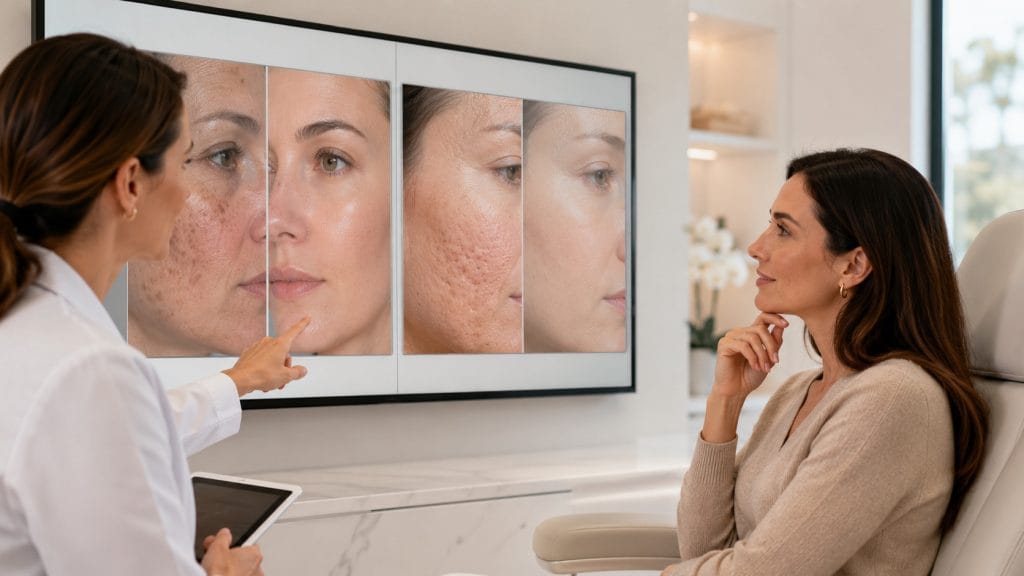
Skin rejuvenation treats the appearance of your skin tone and clarity (pigmentation, redness, sun damage). Skin resurfacing treats your skin texture and structure (fine lines, acne scars, rough skin).
Technically, skin resurfacing is a form of skin rejuvenation.
However, we typically use “resurfacing” when referring to skin rejuvenation treatments that reach deeper to stimulate collagen production and/or physically smooth the skin’s surface.
Want an easier way to remember what each does?
Skin rejuvenation = “clearer skin.”
Skin resurfacing = “smoother skin.”
What Is Skin Rejuvenation?
Skin rejuvenation treats pigment and vascular issues just below the surface of your skin, without greatly affecting the outermost layer.
Skin rejuvenation can help with:
Rosacea / visible blood vessels
Dark spots and hyperpigmentation
How it works
Targeted light/laser energy from treatments like Elite iQ for skin rejuvenation penetrates into the skin and focuses on treating excess pigment and visible blood vessels.
Over time, your body will naturally eliminate these problem areas, revealing a brighter, more even complexion.
Unlike many other skin treatments, there is no harsh peeling or deep resurfacing with skin rejuvenation. Improvement is gradual and controlled.
What will your skin feel like after treatment?
After skin rejuvenation, your skin will look:
Brighter
More even-toned
Less blotchy
Texturally, however, your skin will feel the same.
Skin Rejuvenation is great for those whose main concerns are related to skin tone vs. skin texture.
What Is Skin Resurfacing?
Skin resurfacing is just what it sounds like – getting skin deep.
Skin resurfacing can help treat:
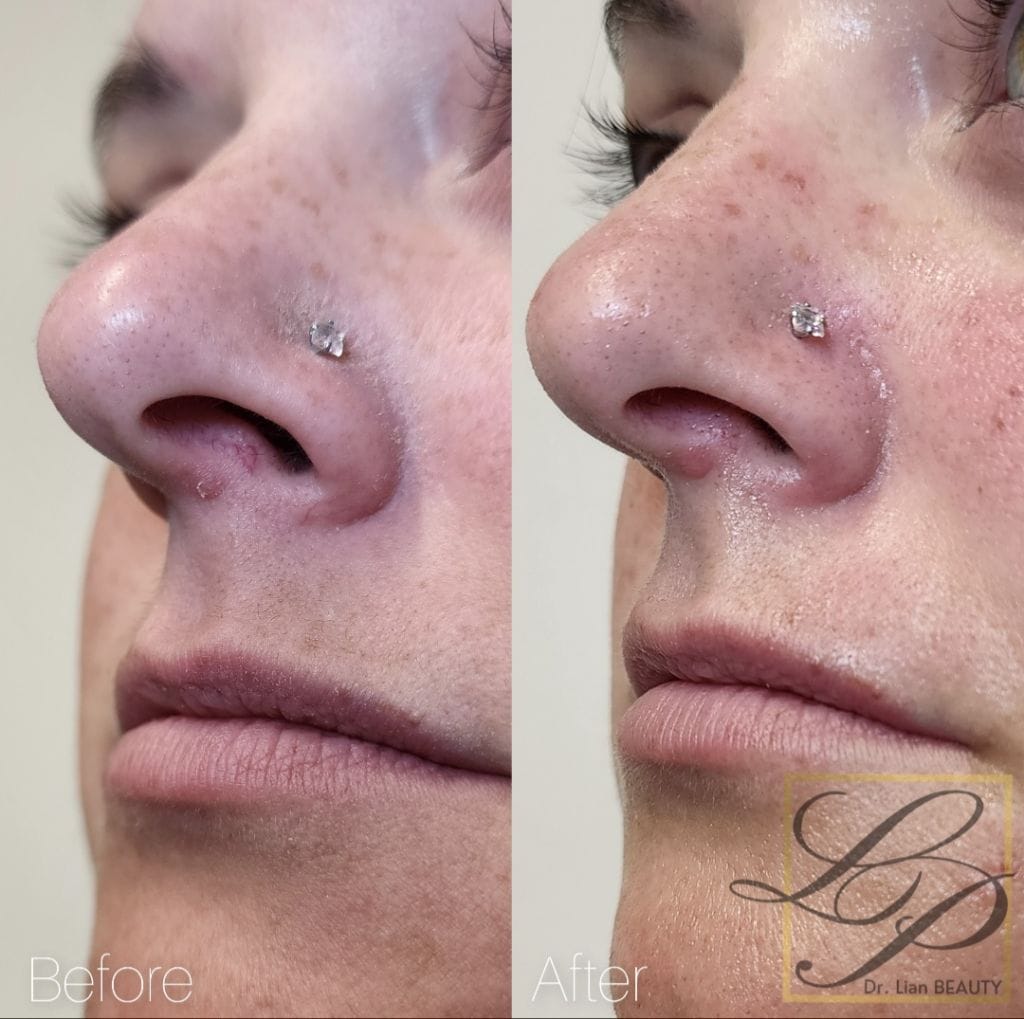
Large pores
Rough skin texture
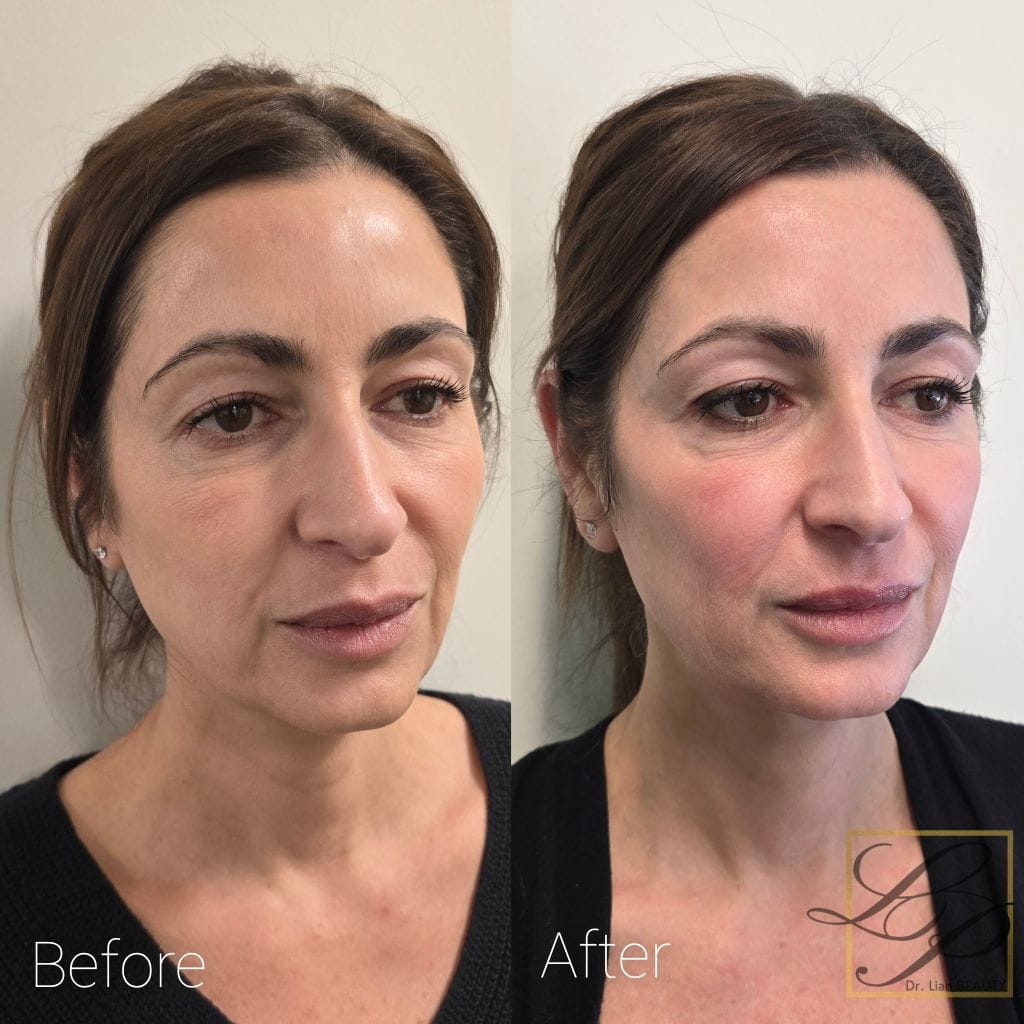
How does skin resurfacing work?
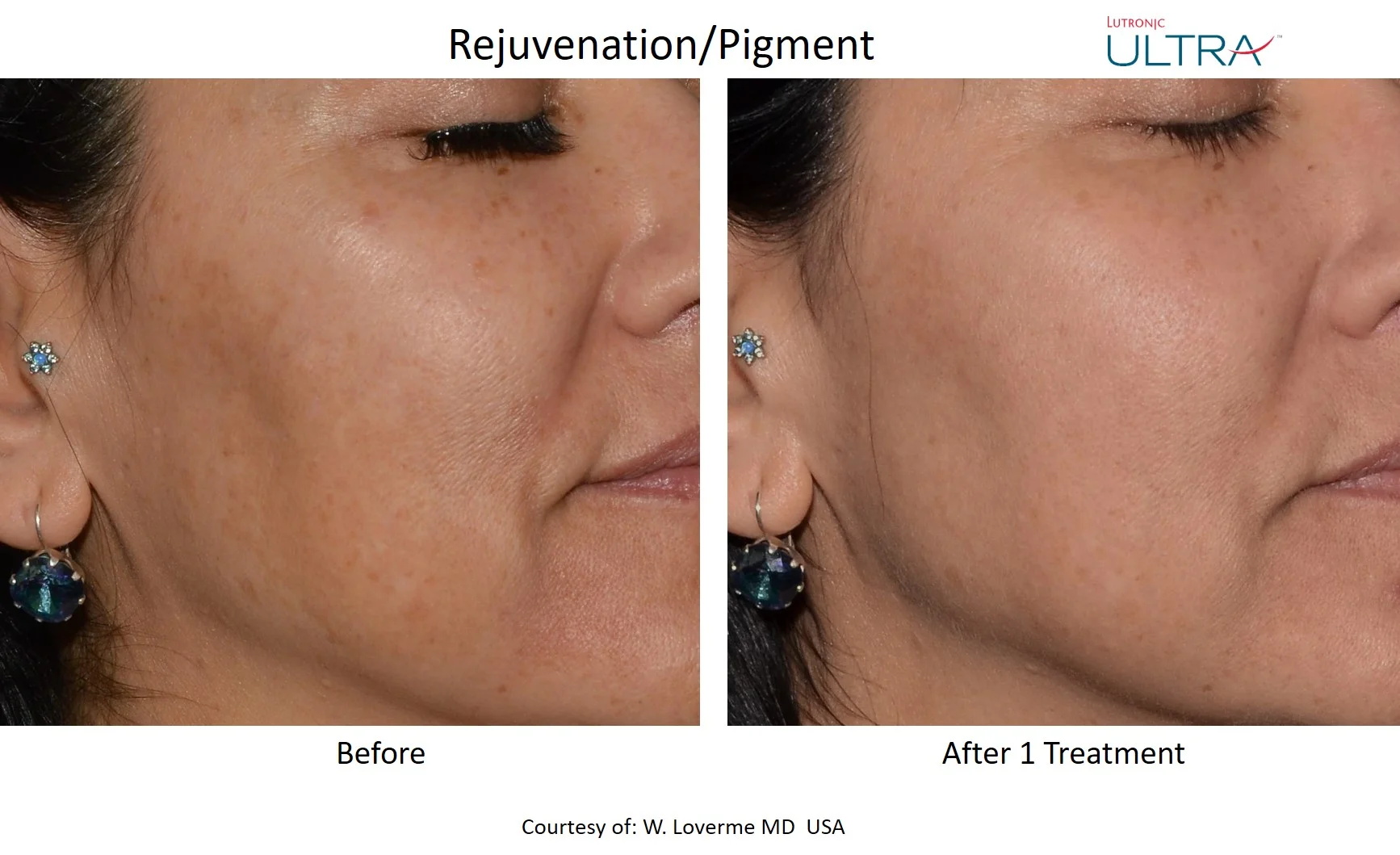
Devices like the Cynosure Lutronic Ultra Laser make precise, microscopic thermal zones (micro-injuries) to the skin.
Your body responds by kicking collagen production into overdrive and gradually replacing damaged skin cells with new, healthier ones.
Wait… ‘injuring’ your skin sounds painful.
It’s not.
And that’s the point.
By creating these micro-injuries, your body is forced to heal itself, making laser skin resurfacing more effective than treatments that work at a shallower level.
The downside?
Traditional laser skin resurfacing (also known as ablative treatments) come with a longer downtime.
However, new non-ablative resurfacing treatments like the Lutronic ULTRA Laser help improve your skin’s appearance with little to no downtime.
For patients that want a more aggressive treatment, our laser clinic located in Limoges, Eastern Ontario, apply numbing creams for a more comfortable experience.
In such cases, a 7-days downtime should be anticipated.
A small detail worth emphasizing (don’t miss this crucial bit).
Not all resurfacing procedures are created equal.
Some lasers actually remove the outer layer of skin (these are called ablative).
Others work underneath the skin’s surface without actually penetrating it (non-ablative).
Lutronic ULTRA Laser is considered non-ablative.
So they can still tighten collagen and smooth out texture…. But with minimal downtime when compared to traditional resurfacing.
Just keep in mind that although “resurfacing” sounds like it may involve more downtime, there are newer treatments that are less aggressive.
Read: Ablative vs. Non-Ablative Laser Skin Treatments In Ottawa & Eastern Ontario
Alternatives to Laser Skin Resurfacing, And Rejuvenation
There’s more than one way to improve skin health.
Other procedures include:
Chemical peels (help exfoliate and even out tone)
Microneedling (stimulates collagen production to improve texture)
Injectables like Dermal Fillers and Dysport® (fill in wrinkles or add volume)
…the list goes on.
But each method has its own strengths and ideal use cases.
Some procedures are better for skin surface issues. Others target deeper layers. Some address multiple concerns while others focus on one thing.
Lasers are unique because they can be very precise and tailored to your specific needs.
Cynosure Elite iQ, for instance, can target pigment (melanin) or blood vessels (hemoglobin) with little impact on surrounding skin.
Treatments like the Lutronic Ultra Laser, a 1927nm Thulium “water-targeting” laser can help smooth out skin texture through controlled epidermal injury and resurfacing.
So while there are alternatives, your “best” option will mostly depend on:
- The concern you want to address
- Your skin type
- And how precise you want your treatment to be
If you want the treatment that will target your concern most effectively, a customized plan is key.
Skin Rejuvenation vs Resurfacing: Which One Do You Need?
Alright, let’s be real.
Ask yourself one question:
Is your skin soft but blotchy… or is your skin rough and uneven?
That answer will lead you right to the right treatment option.
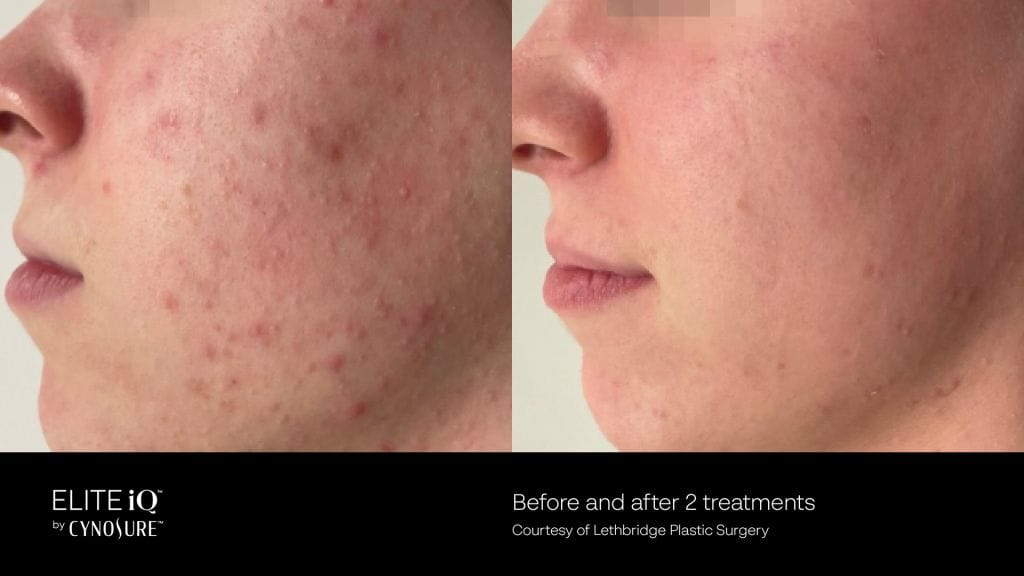
Skin rejuvenation might be right for you if:
You have concerns like dark spots, redness or uneven skin tone.
Your skin texture is smooth but lacks brightness or clarity.
You want minimal downtime.
A skin rejuvenation treatment like Elite iQ could be a good starting point.
You may want skin resurfacing if:
Your skin feels rough or uneven when you look in the mirror.
You have acne scarring or visible wrinkles.
You want to see significant, structural changes to your skin.
You don’t mind a few days of downtime.
Or you like the idea of a gradual, lower-downtime resurfacing approach that non-ablative lasers like the Cynosure ULTRA provides.
Is It Possible To Do Both?
Truthfully… this is when most of our patients see the biggest difference.
It’s rare that someone comes in with just one skin concern.
Maybe you have:
Dark spots and dull skin.
Redness and wrinkles.
Uneven tone and acne scarring.
When you have multiple concerns, that means:
Skin rejuvenation can help clear up your skin.
Skin resurfacing can help smooth out your skin.
…and get you a much more well-rounded skin transformation than just treating one concern.
What can you expect over time?
Don’t skip this section.
Skin rejuvenation:
- Results are visible after multiple treatments
- Darkness will fade over the course of several weeks
- Little to no downtime, depending on your treatment settings
Skin resurfacing :
- Redness / sensitivity / peeling can last up to 2 weeks, depending on your treatment intensity
- Results are visible within weeks as your skin gradually replenishes itself
- Collagen production will continue for months after treatment, allowing your skin to continue improving
There’s no magic pill for great skin.
But using the right treatment for your concern can create results you’ll love.
Keep these things in mind:
Skin rejuvenation will not get rid of deep acne scars or serious skin texture problems.
Skin resurfacing will not magically make pigmentation disappear in one session.
SOME skin resurfacing treatments involve more downtime than skin rejuvenation because it goes deeper into the skin.
Neither of these skin treatments can completely replace surgery for loose skin due to severe aging or sun damage.
Is Laser Skin Rejuvenation, or Laser Skin Resurfacing Worth It?
Like anything else, it depends on what you’re looking to get out of it.
Quick answer?.
YES if:
You want gradual, natural results
You want to kickstart your skin’s natural collagen production
You want a customized treatment plan that targets your specific concern
NO if:
You want instant, dramatic results overnight
You think there’s a magic “fix all” laser treatment that works for everyone.
You pick the wrong treatment for your concern.
Keep in mind that most skin rejuvenation vs. resurfacing patients don’t fail because the treatments don’t work. They fail because they were the wrong treatment for the initial concern.
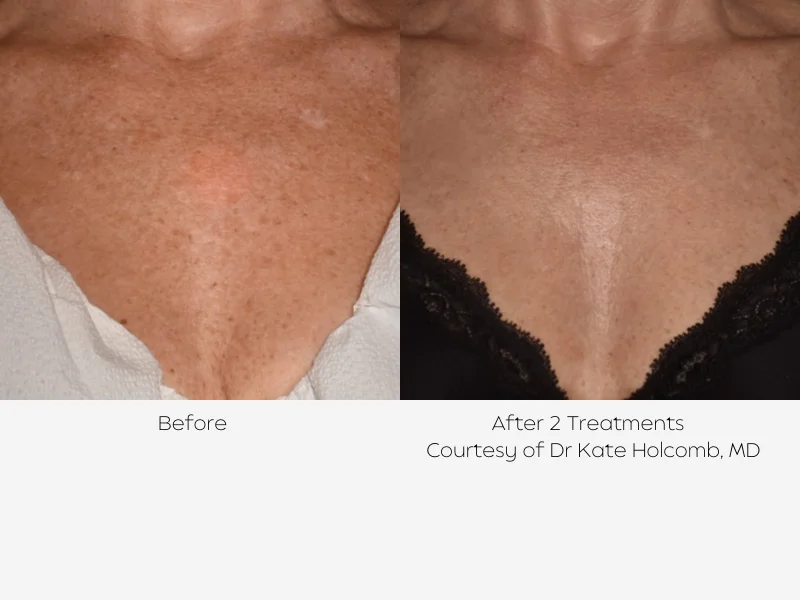
How Do You Know Which Treatment Is Right For You?
You don’t have to be a skin expert to know what you need.
But having a general idea makes things easier.
Concern mostly lies with:
Skin Tone → Start with skin rejuvenation
Skin Texture → Try laser skin resurfacing
Both? → These two treatments together typically yield the best results
Still Not Sure?
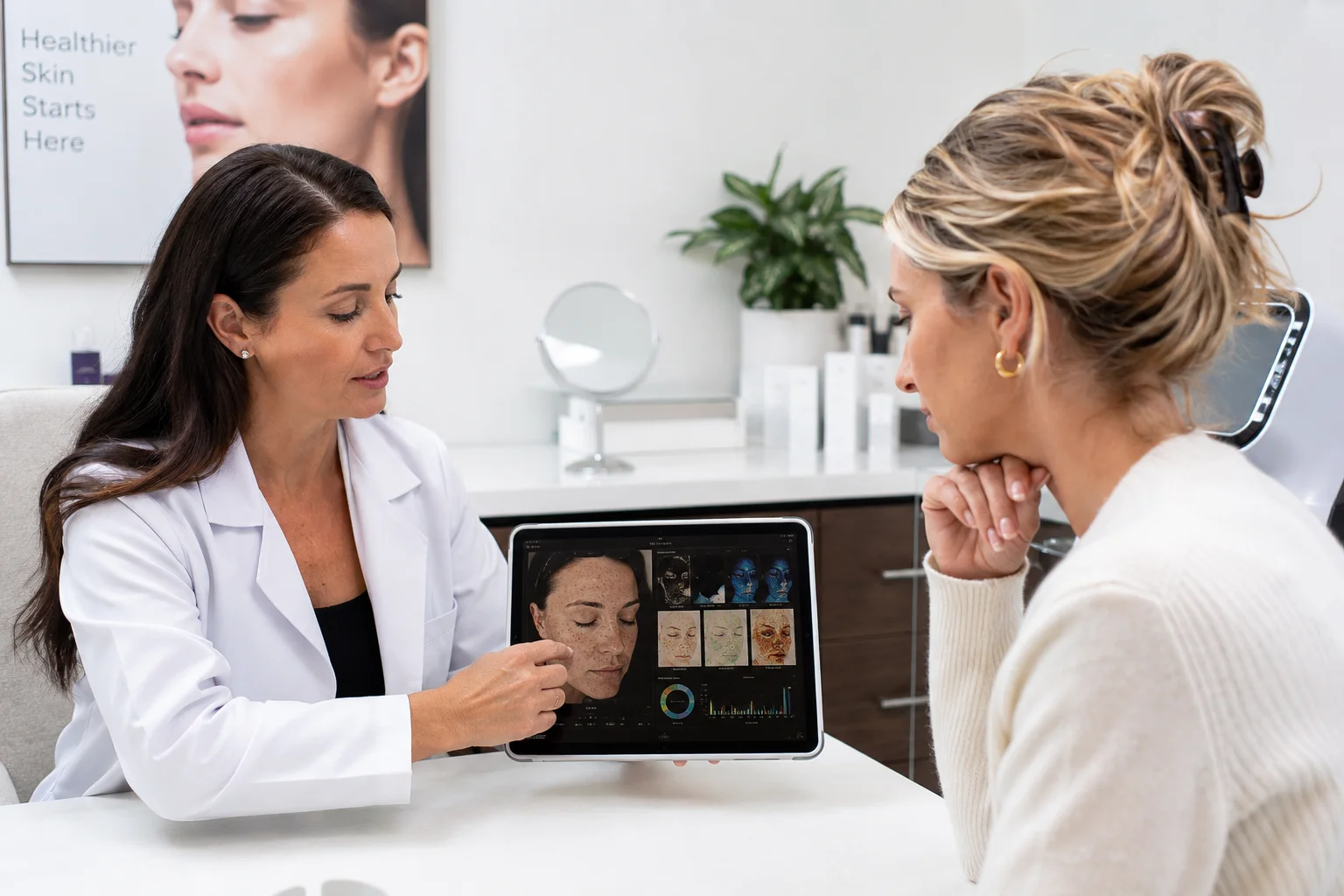
See one of our skin experts for a consultation.
WHAT SHOULD YOU DO NEXT?
Still trying to figure out which laser skin treatment is right for you? That’s okay. Here are a couple of quick steps you can take to help you decide:
Concerns are related to pigmentation, redness or uneven skin tone → Look into laser skin rejuvenation and treatments like a laser facial with Elite IQ
Concerns are related to skin texture (fine lines, acne scars) → Look into laser skin resurfacing and treatments like ULTRA
Still Undecided? → Book A Consultation And Let Us Create A Custom Treatment Plan For You
FAQ: Laser Skin Rejuvenation vs Resurfacing
Is laser skin rejuvenation the same as IPL?
Sort of. IPL falls into the category of skin rejuvenation because it treats pigmentation and redness in the skin. But remember, not all skin rejuvenation treatments are IPL or utilize light energy.
Just remember this: If your aim is to get clearer, more balanced skin without altering its texture, rejuvenation is the category you’re after.
Is laser skin resurfacing more painful than rejuvenation?
Yes…WHEN compared to skin rejuvenation.
Skin resurfacing targets deeper layers of the skin which is why it works so well on wrinkles and acne scars. The downside? Patients report more discomfort during and after the treatment when compared to skin rejuvenation.
(Also note that pain levels are relative to each individual.)
You should know that clinics will always offer numbing options so it doesn’t hurt as much.
How quickly will I see results from laser skin rejuvenation?
You won’t get that perfect glow as soon as you’re done.
Most laser rejuvenation patients see improvement after a few sessions, but the true results take several weeks as your body naturally flushes out pigment and redness. Your skin will gradually improve.
How long does laser skin resurfacing take to recover?
Again, it depends on the strength of the treatment.
Lighter forms of skin resurfacing may cause a few days of redness while stronger formulas could take one to two weeks before you look “ healed.” Remember that even after your skin calms down, the healing process continues under the surface for months.
Is laser skin rejuvenation or resurfacing better for acne scars?
Resurfacing. Almost every time.
Acne scars aren’t just about color or skin tone—they’re about texture. To improve acne scars, you need a treatment that stimulates collagen production and rebuilds the skin. That’s skin resurfacing.
Can I do laser skin rejuvenation and skin resurfacing at the same time?
Yes. In fact, that’s often the ideal way to go.
Patients who have both skin tone and texture problems can hit two birds with one stone. By combining rejuvenation and resurfacing, you don’t have to pick one or the other.
Many skincare professionals will recommend this customized approach.

Dr. Lian Peter, MD, MPH, CCFP, is a Family physician with a passion for aesthetics. In her aesthetic clinic, she provides a wide range of minimally invasive and non-invasive procedures, constantly honing her skills to deliver exceptional care and help patients attain their desired appearance.

 EN
EN  FR
FR