

The changes that pregnancy puts on your body are NORMAL. But that doesn’t make them easy to deal with sometimes. Many women experience loose skin post-pregnancy gradually across the abdomen, sometimes down the lower belly, and sometimes accompanied by stretch marks, laxity, softness, or a “droopiness” where skin doesn’t lay like it used to.
And here’s the truth…this is where most online posts get it wrong.
Some tell you creams will magically shrink everything back up. Some push straight to surgery. But it’s more nuanced than that. For mild to moderate skin laxity, there are non-surgical options that can improve firmness, texture, and collagen support. But for pronounced excess skin, there is no alternative to surgery when it comes to removing skin.
This article isn’t about “getting your body back” or “bouncing back.” It’s about helping you understand exactly what is going on with your skin after pregnancy, and what CAN be improved naturally and what non-surgical options could be right for you right here in Ottawa, Limoges, or across Eastern Ontario.
Key Takeaways
Perhaps the most important tip for tightening loose skin after pregnancy non-surgically is to realize that not all concerns can be treated the same way.
- For mild to moderate excess skin, treatments that help stimulate collagen production, like radiofrequency and RF microneedling, as well as some laser-based treatments, can help.
- XERF is designed for deeper structural skin tightening. Cynosure Ultra treatments are better for skin texture, tone, and improving skin quality overall.
- Skincare, hydration, nutrition, and core exercise can help with recovery, but they won’t suck in a significant amount of loose skin.
- If you are breastfeeding, have recently given birth, or had a C-section, timing of treatments and getting medical clearance are important.
Severe excess skin may require surgical removal.
Can You Tighten Loose Skin After Pregnancy Without Surgery?
Short answer…. yes. Sort of.
It’s possible to tighten skin post-pregnancy non-surgically, though this will usually apply to mild/moderate looseness. More often than not, tightening skin means penetrating deeper into the skin to stimulate collagen build-up, as opposed to just superficially improving its appearance.
The treatments that usually have the most profound impact include:
- Radiofrequency/stimulator treatments for tightening: Technologies like XERF work well for firming/restructuring.
- RF microneedling for deep remodeling and combo skin tightening + skin texture improvement.
- Laser treatments like Cynosure Ultra to tighten skin, as well as improve skin quality, skin texture, skin tone, and collagen structure
That being said, it’s important to understand from the beginning that:
Non-surgical treatments can help tighten the way your skin looks and feels… but they will not tighten away excess skin.
So the question really isn’t can you tighten it non surgically- it’s how much can be improved.
Why Does Skin Become Loose After Pregnancy?

It’s not any single factor. It’s most likely a result of several things happening together.
Your skin stretches too far. When your skin stretches to accommodate pregnancy growth, collagen helps give it structure while elastin helps it stretch.
But if your skin is stretched beyond its limits, it may not return to its original shape afterwards.
Changes in hormones impact healing. After birth, your estrogen levels decrease and your body produces less collagen. That can impact how quickly your skin appears to bounce back.
Relaxin also plays a part. This hormone loosens your connective tissue throughout pregnancy so your body can expand. After pregnancy, relaxin levels decrease, but your body doesn’t just snap back to its pre-relaxin state.
Loss of muscle tone. Not all the “loose skin” you see is actually skin.
Conditions like abdominal muscle separation (diastasis recti) can cause laxity because there is less support under the skin.
This is important to know, because treatments that target skin won’t help with muscle separation.
If your stomach still appears rounded or domed when you move, it may be beneficial to seek postpartum physical therapy before pursuing aesthetic treatments.
Weight fluctuations impact skin elasticity. Gaining and losing weight will stretch out your skin. Putting on pregnancy weight rapidly also doesn’t give your skin time to adjust, which may contribute to loose skin.
Every woman is different. Age, genetics, how many pregnancies you’ve had, and your general health all play a part in how your body will react.
Just because two people experienced similar pregnancies doesn’t mean they’ll have the same recovery process.
Read: How To Tighten Loose Facial Skin: Non-Surgical Face Skin Tightening in Ottawa & Eastern Ontario
Will Loose Skin Tighten On Its Own After Pregnancy?
Yes, to an extent.
The majority of your body’s natural recovery will occur within the first 6-12 months after childbirth.
Within those 6-12 months:
- Your hormones will regulate
- Collagen production will gradually return to normal
- Your body will continue to heal
- Your uterus will shrink back down and your belly will continue to change
- You may see increased muscle tone, if you engage in safe postpartum exercise
This is often enough time for mild cases to show noticeable tightening.
However, if your skin has been overly stretched out, or if your body’s underlying support hasn’t returned completely, you may find that your progress simply plateaus.
That’s typically when people start looking into extra measures outside of at-home recovery.
Just remember: allow yourself enough time to determine your end-result. Your skin is still changing rapidly in the early months of postpartum.
Don’t base your judgment of your six-week body on what it will look like six months from now.
What Can You Do At Home To Support Skin Tightening After Pregnancy?
They won’t miraculously “tighten” skin overnight…but they CAN help your recovery.
Here’s how:
Ease back into core strength. When your doctors say it’s okay, a slow, consistent approach to core exercises will help re-establish the internal scaffolding for your skin.
We’re not talking about aggressive crunches ASAP. Just progressive training that restores core strength over time.
Should you be worried about diastasis recti, pelvic floor issues, or tenderness from your C-section scar, it’s best to consult your doctor or a postpartum physical therapist prior to any strenuous core workouts.
Eat collagen-supportive food. Collagen is the scaffolding of your skin. Protein, vitamin C, zinc, and healthy fats help your body produce collagen and repair tissue.
Stay hydrated and maintain skin care. Staying hydrated will help your skin from the inside out. Topical products can:
- Help with skin texture
- Support your skin’s barrier
- Help with dryness
- Potentially improve skin elasticity
- Allow your skin to appear smoother and more healthy in the meantime while deeper recovery occurs
Remember, these won’t physically tighten your skin either.
Don’t rush weight loss. Rapid weight loss can actually make excess looseness more apparent. Allow time for your body.
What Skincare Ingredients Can Support Postpartum Skin?
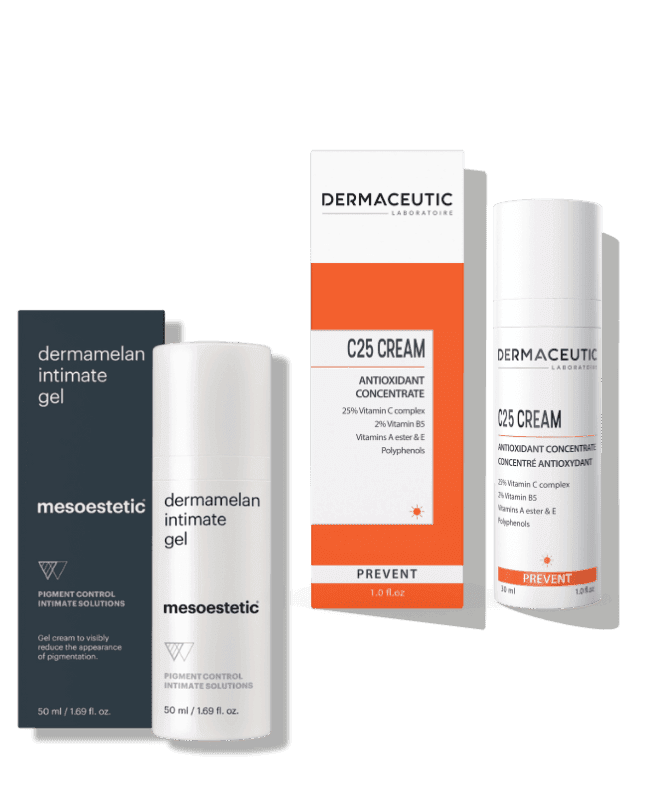
Skincare needs to get its own paragraph because it’s where most moms begin before they start exploring treatment options. Totally get it. It’s low risk, accessible, and can easily fit into your routine.
Just keep your expectations realistic.
Skincare can help improve the hydration, texture, barrier, and overall quality of postpartum skin. But it cannot tighten sagging skin.
Ingredients to look for that can help improve skin quality
- Hyaluronic acid to improve hydration and give skin a plumper appearance
- Peptides to help improve the appearance of firmness
- Vitamin C to support collagen synthesis and skin brightness
- Ceramides and moisturizers to help repair and restore the skin barrier function
- Gentle exfoliants if skin texture is a concern
A quick note about retinoids. You may see retinoids floating around for their collagen-boosting and skin-texture-improving effects. However, they are not recommended during pregnancy or breastfeeding.
If you’re nursing, trying to conceive, or close to becoming pregnant, be sure to check with your doctor before incorporating a retinoid into your routine.
What Skincare Can’t Do
Here are the things skincare can’t do:
- Lift excess, sagging skin
- Improve diastasis recti
- Remove excess skin that has been “lost”
- Replace RF treatments, RF microneedling, or laser treatments for deeper collagen support
Skincare should be thought of as supportive care. Not a cure-all.
What Are The Best Non-Surgical Treatments For Loose Skin After Pregnancy?
Clinic treatments should be considered when at-home methods won’t suffice. Here are options:
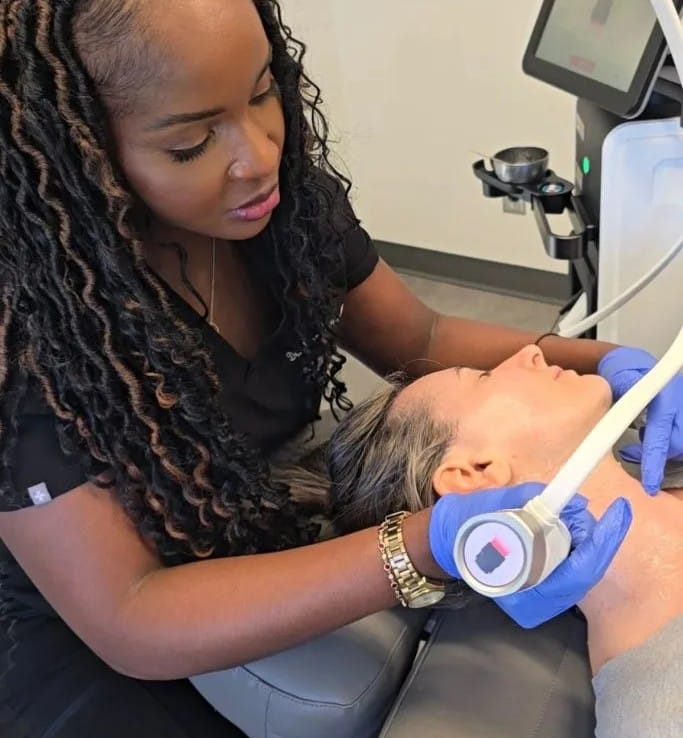
Radiofrequency skin tightening. Radiofrequency treatments apply controlled heat deep in the skin. Over time this stimulates collagen production which leads to firmer skin.
Treatments such as XERF are great for this purpose. They focus on underlying structure with little downtime.
Ideal for:
- Mild to moderate skin laxity.
- Areas of skin that feel soft or lacking support.
- Postpartum skin that needs more deep tightening, instead of just surface smoothing.
See before and after photos of XERF® treatment
RF microneedling. Microneedling paired with radiofrequency energy. It gets to deeper skin layers more directly and can be a more intensive approach.
Ideal for:
- Loose skin that has an uneven surface or texture.
- Fine lines in addition to laxity.
- Targeted areas that need significant remodeling.
- Areas that need collagen stimulation and texture improvement.
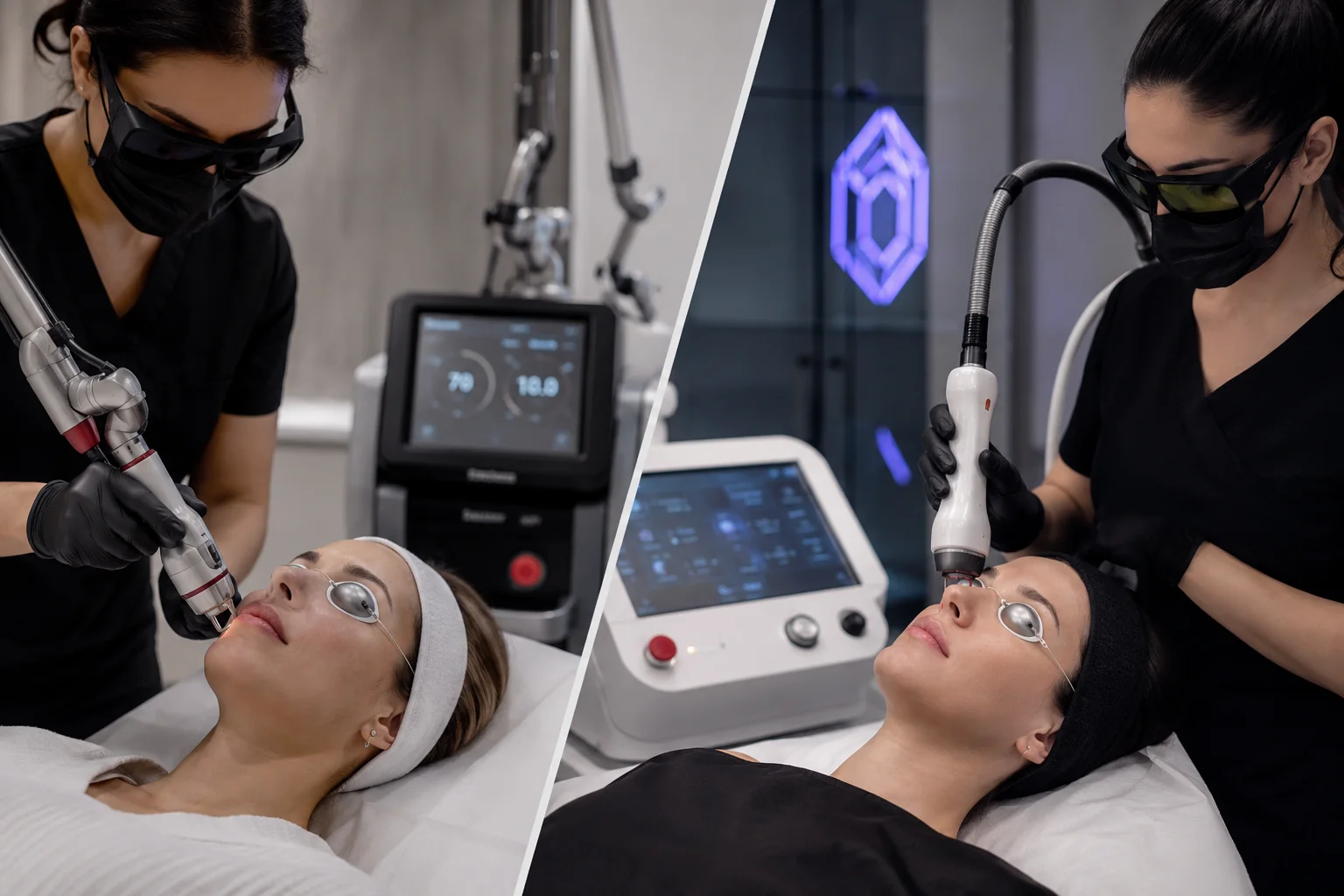
Laser-based skin tightening. It’s important to understand laser treatments like Cynosure Ultra in the postpartum skin context. They excel at:
- Smoothing texture
- Balancing out tone
- Promoting collagen production
- Improving crepey or dull postpartum skin
- Helping skin look smoother and more refined.
These can give the appearance of more firmness too but are usually better in early stages. They aren’t always the ideal solution for deeper laxity.
Ultrasound skin tightening. Treatments that reach deeper with ultrasound technology.
These tend to be more targeted, slower to produce visible results, and prescribed for certain cases instead of being used universally.
Read: Comparing Different Professional Skin Tightening Treatments in Ottawa and Eastern Ontario
Where Do XERF® And Cynosure Ultra Fit Into Post-Pregnancy Skin Tightening?
Ok, this is typically where people get tripped up…
XERF = structural tightening
Ultra = improving skin quality & helping underlying collagen
XERF delivers radiofrequency energy into the deeper layers of tissue, heating it. This creates collagen remodeling in the deeper layers where lift/support has been lost.
XERF focuses more on “tightening”.
Ultra would be more beneficial for patients concerned with how their skin feels or looks. Loose skin, sagging skin is not its strong suit, but skin that has softened firmness or has mild to moderate laxity may find XERF is a better “fit” than a laser aimed at resurfacing.
Cynosure Ultra improves more surface to mid layer issues (texture, tone, skin quality, crepey skin, uneven skin post-pregnancy, and skin that just looks tired/dull/smooth)
Ultra can help firmness, but in most cases will not substitute for treatments that create tighter results.
Ok, now why SOME patients can benefit from BOTH treatments.
When skin is loose and feels weak, as well as appears uneven/color inconsistent – treating the underlying support issue as well as the surface problem can work well together.
Think of it as one treatment improving the structure, and one treatment improving the skin you see.
Typically that will yield more natural results than going after JUST one or the other.
(This is also why a consultation matters. Treatments aren’t about using every gadget we own. Treating your skin is about identifying the root problem and fixing it.)
Loose Skin, Stretch Marks, Or Muscle Separation: What Are You Actually Treating?
This section is missed far too often.
Loose skin. Loose skin can feel soft, thin/creasey or unsupported.
Responds best to treatments that stimulate collagen:
- RF skin tightening
- RF microneedling
- XERF (primarily if structural tightening is your concern)
Stretch Marks. Stretch marks are alterations in the dermis.
Will typically respond best to laser treatments like Cynosure Ultra or other resurfacing-style treatments, microneedling, and any type of texture-focused treatment, depending on the type and severity of the stretch marks.
Skin tightening treatments alone will typically yield sub-par results if stretch marks are your main concern.
Muscle separation. Diastasis recti is a muscle condition, not a skin condition.
If you have diastasis, your first set of questions should be to a physiotherapist or doctor.
This is especially true if your stomach still appears rounded, protrudes when moving/breathing, or “droops” / lacks support even after weight loss.
Why do you need to know this? Fixing the wrong problem will ALWAYS leave you feeling disappointed with your results.
A skin tightening treatment will not tighten separated abdominal muscles. No cream will take away stretched skin. And no laser can substitute for surgery if there are significant amounts of excess skin.
Pairing the right concern with the right solution is what we’re here for.
How Soon After Pregnancy Can You consider Skin Tightening Treatments?
It depends on recovery.
Begin with clearance from your doctor.
In general, most people will wait until after their postpartum appointment to start thinking about aesthetic treatments. While the six-week mark is a good benchmark, that appointment doesn’t necessarily clear you for all treatments.
Your provider should take into account:
- The type of delivery you had
- If you had tearing or other complications
- If you had a C-section
- If you are breastfeeding
- If there is pain, infection, or healing that is taking longer than expected
As with any pregnancy-related questions, if you are breastfeeding be sure to let your provider know before starting any treatment. This can change the timing of certain treatments, the products recommended, and your treatment plan overall.
If you had a C-section you will need to allow time for proper healing before performing any treatments on your abdomen.
The scar, tissue around it, and the healing that’s happening internally all need to be taken into consideration. You don’t want to treat too soon and cause more damage.
What Does Recovery Look Like For Non-Surgical Skin Tightening Treatments?
Another perk of these treatments? Little to no downtime.
RF treatments. Typically, little to none. Most patients can resume normal activities immediately after treatment.
RF microneedling. You may experience redness and sensitivity for a few days.
Microneedling, even when performed with RF energy, is designed to create controlled micro-trauma to the skin. Aftercare is important and your skin may require some additional downtime to heal than it would from a non-invasive RF treatment.
Laser treatments. Can range from little to several days depending on intensity.
Mild laser treatments can have little to no visible recovery time. Moderate-to-high laser treatments can cause several days of redness, sensitivity or peeling.
Ask your provider about how much downtime you’ll need before your treatment, especially if you’re caring for a newborn and can’t easily take time away from your responsibilities.
How Much Do Postpartum Skin Tightening Treatments Cost?
Price can vary based on what type of treatment you are getting, what area is being treated, how many sessions you need, and if you are looking to do a combination treatment.
For instance:
- RF tightening treatments may require multiple sessions
- RF microneedling might require less overall sessions but more concentrated treatments
- Laser treatments may have specific time intervals depending on your skin concern and strength of treatment
- Combination treatments may be more expensive but can help you treat more than one concern
Instead of thinking about “What is the least expensive option?” you should think about what treatment will actually solve the problem you want to treat.
An inexpensive treatment that doesn’t solve the proper problem is still a waste of money.
How To Choose The Right Skin Tightening Treatment In Ottawa And Eastern Ontario
The most popular treatment is not necessarily the right treatment for you.
The right treatment is the one that’s tailored to:
- Your degree of laxity
- Your stage of recovery
- Your aesthetic goals
- Your skin complexion
- Whether or not you’re breastfeeding
- Your birth history and recovery timeline.
Questions to ask when consulting
- What are we treating?
- Is it loose skin? Stretch marks? Muscle separation? Skin texture?
- “What” results are realistic?
- How many treatments will be required?
- “What” downtime can I expect?
- Can I get this treatment while breastfeeding?
- Would you recommend physio, medical review or surgery over aesthetic treatment in my case?
Qualities to look for in a clinic/provider
- Educates you on trade-offs
- Doesn’t recommend the same treatment to every patient
- Personalizes treatment recommendations to your unique situation
- Understands postpartum healing
- Can explain the difference between skin tightening and skin resurfacing vs. stretch mark treatment vs. muscle separation
- Is honest with you when treatment cannot be done effectively non-surgically.
Bonus points if they’re located near you (Ottawa, Limoges, Embrun, Russell, Casselman, Eastern Ontario). While being close to home is a plus, the real key is finding a clinic that thoroughly checks out your body before deciding on a treatment for you.

Dr. Lian Peter, MD, MPH, CCFP, is a Family physician with a passion for aesthetics. In her aesthetic clinic, she provides a wide range of minimally invasive and non-invasive procedures, constantly honing her skills to deliver exceptional care and help patients attain their desired appearance.


 EN
EN  FR
FR