

As we age, collagen production slows down, leading to wrinkles, fine lines, and sagging skin.
Fortunately, non-surgical skin tightening treatments like RF microneedling and Ultherapy have made it possible to restore skin firmness without invasive procedures.
Both Ultherapy and RF microneedling work by stimulating collagen production, but they do so in different ways.
Ultherapy uses ultrasound energy to penetrate deep into the skin and trigger a lifting effect. RF microneedling, on the other hand, combines microneedles with radiofrequency energy to remodel collagen at multiple depths, improving both skin laxity and texture.
So, which one is the better choice for skin tightening? The answer depends on your skin concerns, comfort level, and desired results.
You may like: Non-Surgical Skin Tightening in Eastern Ontario: What Helps, What Doesn’t, and How to Find the Right Fit
How RF Microneedling and Ultherapy Compare
RF microneedling and Ultherapy are both non-invasive treatments that stimulate collagen production, but they work in distinct ways.
Ultherapy uses ultrasound energy to penetrate deep into the skin, reaching the foundational layers where it triggers a lifting and tightening effect.
This makes it a popular choice for addressing moderate skin laxity, particularly on the face, neck, and décolletage. However, because the ultrasound energy targets deeper layers, some patients report more discomfort during the procedure.
RF microneedling, on the other hand, combines microneedling with radiofrequency energy to create micro-injuries in the skin while simultaneously delivering heat to the dermis.
This dual action stimulates collagen and elastin production, improving skin texture, reducing fine lines, and tightening loose skin.
Unlike Ultherapy, RF microneedling works on both the surface and deeper layers of the skin, making it effective for treating wrinkles, acne scars, and overall skin quality. It is also considered more comfortable and has a shorter recovery time, with mild redness and swelling that typically subside within a few days.
While both treatments are effective for skin tightening, RF microneedling offers additional benefits, such as improving skin texture and tone, minimizing scars, and reducing pore size.
Well…not exactly.
Pores don’t physically shrink, but as the skin tightens and firms, they appear smaller and less noticeable.
Rf microneedling is also more customizable, as the depth of the needles and intensity of the RF energy can be adjusted based on the patient’s specific needs.
Ultherapy, on the other hand, is often chosen for deeper skin laxity concerns, particularly for lifting sagging skin in areas like the jawline and brows.
Ultimately, the choice between RF microneedling and Ultherapy depends on individual skin concerns and treatment goals.
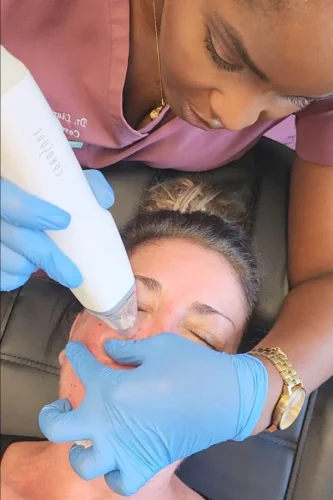
However, many prefer RF microneedling, particularly Potenza RF microneedling, due to its ability to enhance skin quality while providing noticeable firming effects with minimal discomfort and downtime.
Learn More About Potenza:
What is Potenza RF Microneedling: The Secret To Flawless Skin
How Ultherapy and RF Microneedling Work Beneath the Skin
Both procedures work to increase collagen production, but they do so at different depths with different energies.
Ultherapy targets tissue below the skin’s surface with focused ultrasound energy. It works down into deeper, foundational tissue layers. Specifically, one of Ultherapy’s targets is the SMAS layer, which is tightened during a facelift. Since Ultherapy’s ultrasound energy does not affect the skin’s surface, it’s known for being used mainly for lifting and tightening deeper tissue.
RF microneedling uses fine needles combined with radiofrequency energy to penetrate into and create controlled micro injuries in the dermis while heating the skin at the same time.
RF Microneedling causes the body to produce collagen and elastin at various depths of the skin.
Due to RF microneedling’s ability to affect both surface and deep layers of the skin, RF microneedling isn’t used exclusively for skin tightening. In fact, it can be used to treat:
- acne scarring
- large pores
- rough skin texture
- fine lines
It’s just one reason why Ultherapy treatments are often thought of as lifting treatments, while RF microneedling is used for skin rejuvenation.
Read: How To Tighten Loose Facial Skin: Non-Surgical Face Skin Tightening in Ottawa & Eastern Ontario
Is RF Microneedling Better Than Ultherapy?
There are benefits to both treatments, but RF microneedling can be seen as a more flexible option since several skin issues can be targeted during the same treatment course.
For patients looking to tighten their skin while also improving the overall quality of their skin, RF microneedling is often the procedure of choice.
Customizable options like different needle depths and variable RF modes that target specific concerns allow Potenza RF microneedling treatments to be tailored even further.
RF microneedling is also typically safe for all skin types including darker skin tones.
However, Ultherapy may be better if your main concern is deeper laxity or lifting under the jaw, neck or brow area.
Read: Potenza RF Microneedling For Stretch Marks Treatment
Which Is Better for Skin Tightening: RF or Ultrasound?
When moderate to clearly visible skin sagging is the issue, opting for ultrasound treatments such as Ultherapy could prove more advantageous due to their capacity to target the deeper foundational layers of tissue below the skin.
On the other hand, RF microneedling may be preferable if you want both tightening and visible improvement to skin quality.
Patient comfort and downtime should be considered as well.
Ultherapy tends to be less comfortable in the treatment room as the energy penetrates deeper below the surface of the skin. Microneedling with RF energy is typically well tolerated with the use of topical numbing, though there may be some temporary redness and swelling for a couple of days following treatment.
Ultimately it comes down to if you need deeper lifting or more surface-level rejuvenation.
Alternate Skin Tightening Treatment At Dr. Lian Beauty : Cynosure XERF RF Skin Tightening in Eastern Ontario
Can I Do RF Microneedling After Ultherapy?
Yes, RF Microneedling can be performed after Ultherapy. This is because Ultherapy and RF microneedling affect different layers of skin.
For this reason, many patients undergo RF microneedling following Ultherapy to achieve even better results with acne scars, fine lines, or skin texture.
Sometimes these treatments are done together as part of a collagen-stimulation treatment program. Always leave time between treatments for healing- your consultation will help you determine treatment timing.
How Many Sessions Do RF Microneedling and Ultherapy Require?
is typically administered as one treatment session, though some downtime treatments may be recommended down the road as the collagen production wanes with age.
RF microneedling is typically performed as a series of treatments spaced out every few weeks. Patients commonly receive about 3–4 treatments then maintain with periodic treatments depending on skin concerns and desired goals.
This is key when understanding the difference between the two treatments.
Ultherapy markets itself as a one-time lift procedure, while RF microneedling takes the approach of a treatment done over time for collagen remodeling.
How Long Does Results From Rf Microneedling and Ultherapy Last?
Ultherapy results can last up to 1–2 years, depending on individual factors such as age, collagen production, and skincare routine.
Since collagen naturally continues to degrade with age, maintenance treatments are usually needed.
RF microneedling, on the other hand, can be done in a series (3–4 sessions) followed by annual maintenance to sustain collagen stimulation and maintain a youthful, refreshed appearance.
You can book an Rf microneedling appointment at our clinic to speak with a physician regarding your skin tightening concern.
Related Article: Does RF Microneedling Burn (Facial) Fat?
Choosing the Right Skin Tightening Treatment
Essentially, which option is best for you will depend on your aesthetic goals.
Do you want deeper lift and/or more significant improvement in skin laxity? You may benefit more from Ultherapy. Looking for improvement in texture, pores, acne scars, and fine lines combined with collagen stimulation? RF microneedling may be able to offer more comprehensive benefits.
You may also want to factor in recovery time, comfort with the treatment itself, and how many treatments you’ll need.
Here at Dr. Lian Beauty, Limoges, Eastern Ontario, we offer Potenza RF Microneedling — an advanced form of RF microneedling created to help facilitate personalized collagen stimulation with virtually no downtime.
If you’re interested in non-surgical skin tightening options, schedule your consult with us to find out which treatment is right for you!
Ready to explore your options? Book a consultation today!

Dr. Lian Peter, MD, MPH, CCFP, is a Family physician with a passion for aesthetics. In her aesthetic clinic, she provides a wide range of minimally invasive and non-invasive procedures, constantly honing her skills to deliver exceptional care and help patients attain their desired appearance.


 EN
EN  FR
FR